
Last updated November 4, 2026
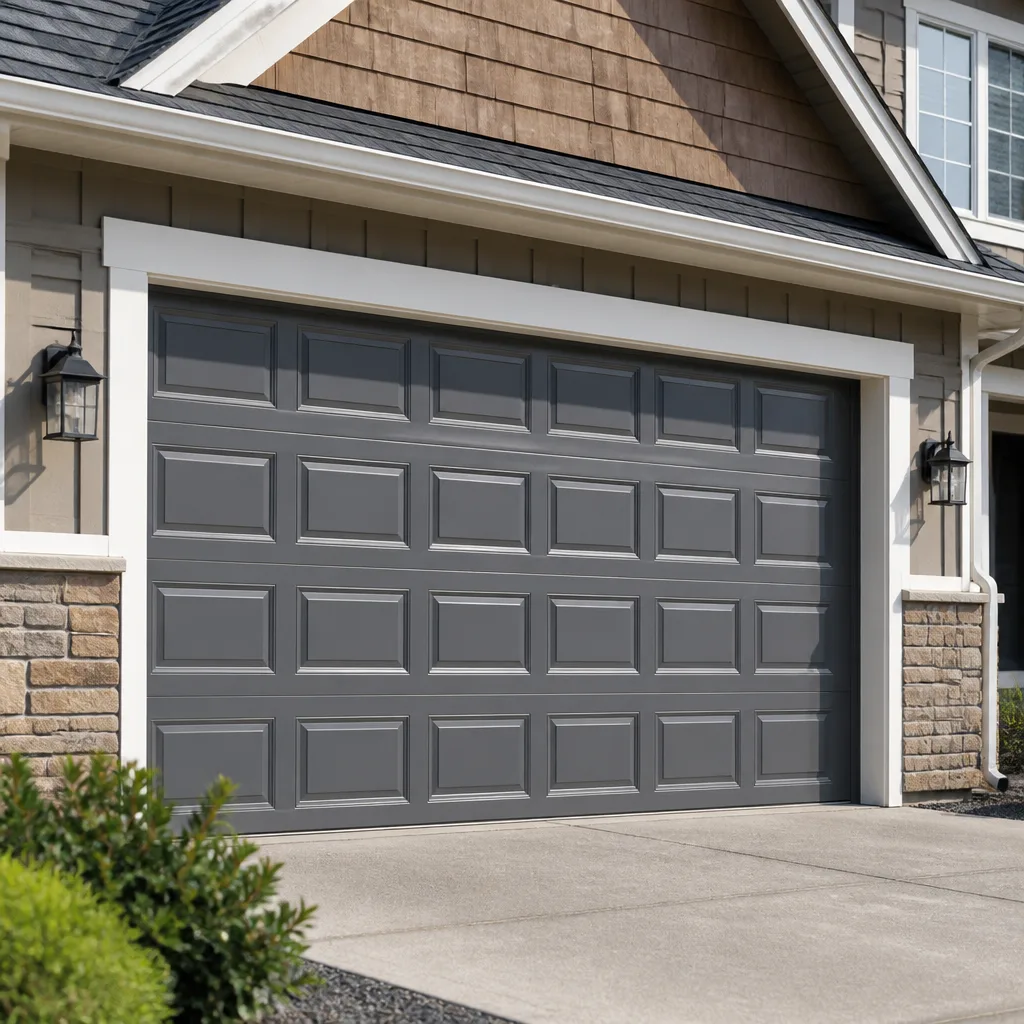 Raised-panel steel
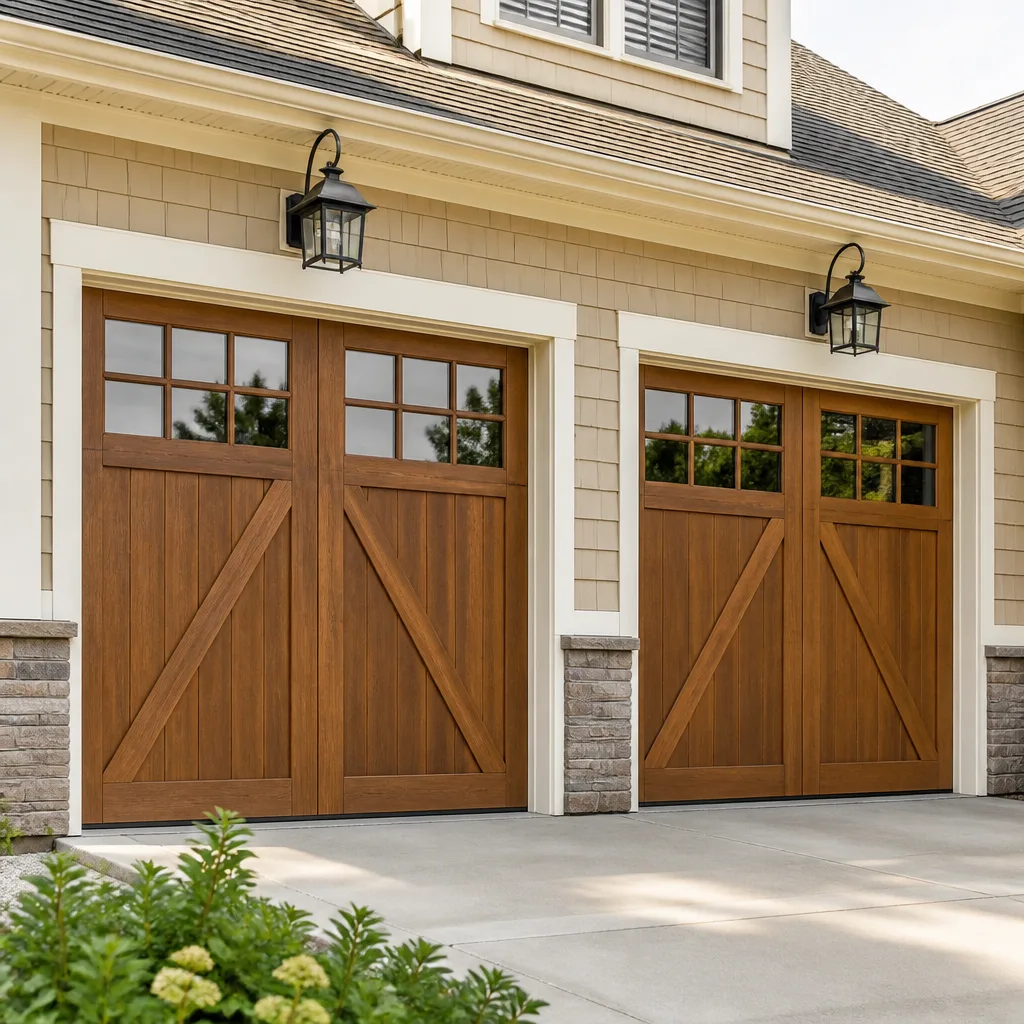 Carriage house
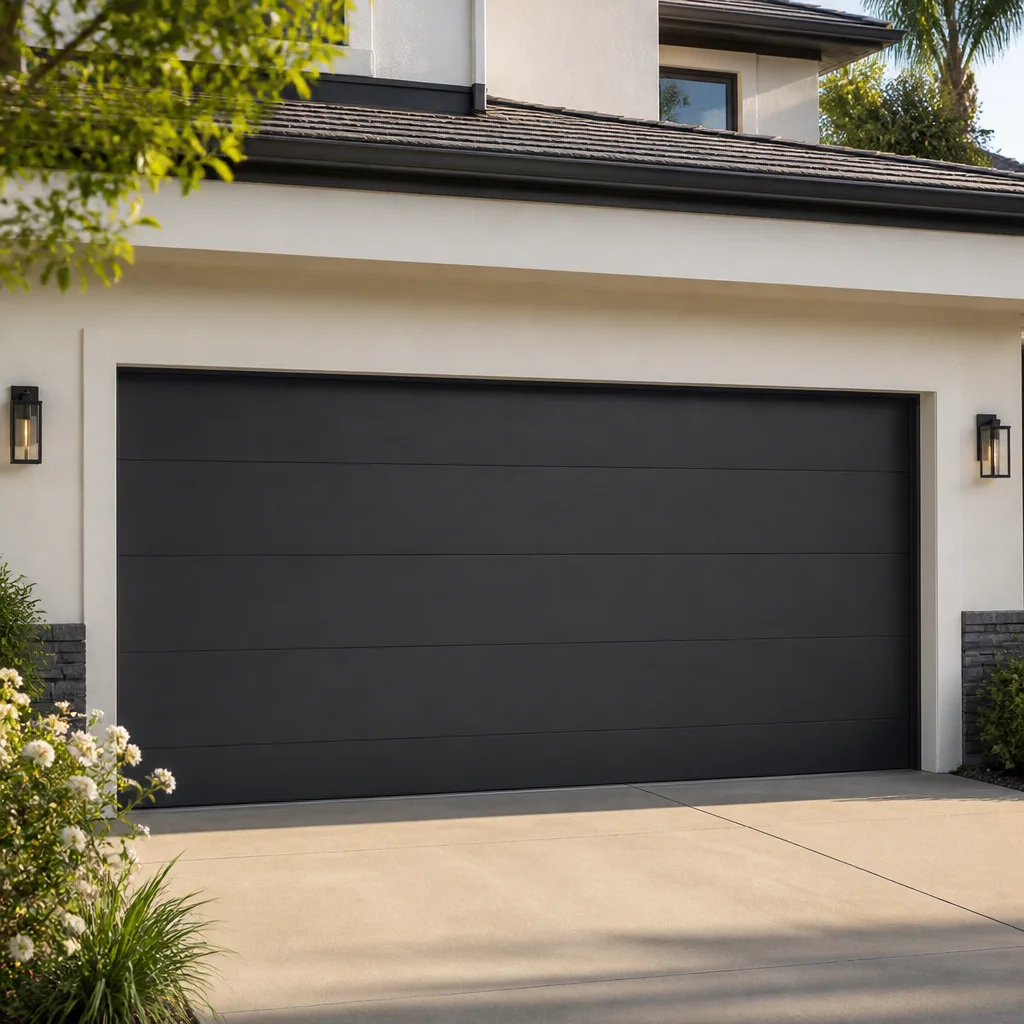 Modern flush
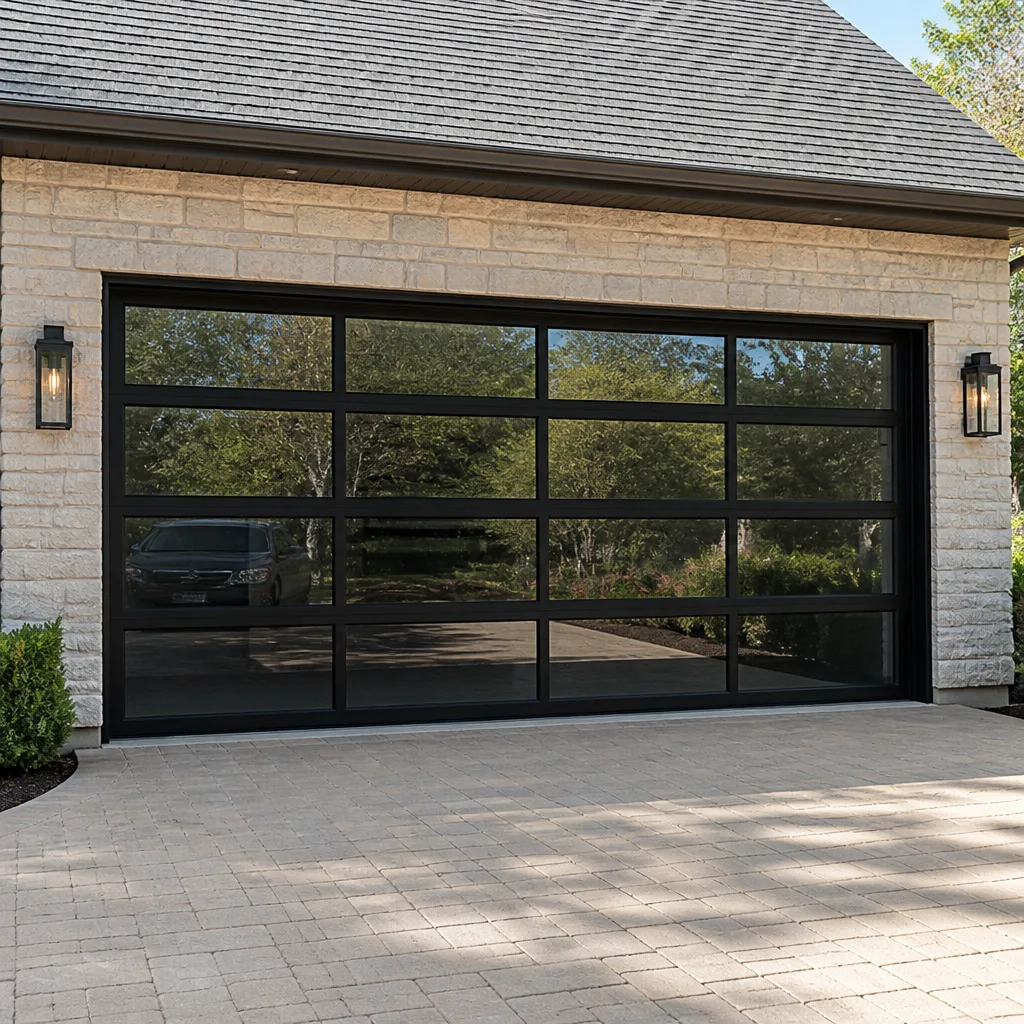 Full-view glass
 LiftMaster openers
 Chamberlain openers
Full 25-point door and opener safety check with every visit - springs, cables, rollers, tracks, and your LiftMaster or Chamberlain opener included
You get a price before we start. It does not change when the truck arrives.
Get your free estimateGarage Door Warning Signs: An Alameda Homeowner’s Reference Guide
Most garage door warning signs are published without any sense of proportion. A rusty track and a failing torsion spring both get described as “problems to watch,” but one is cosmetic and the other carries enough stored energy to launch a several-hundred-pound door off its rails. A door that runs slowly and a door about to blow its cables can look, to the untrained eye, nearly identical. That’s the gap this Alameda guide is built to close. We’ll walk through what is actually harmless, what signals a system in decline, and what should make you stop using the door today. No vague warnings, no generic “get it checked out” filler. Just the mechanical facts, ranked by how urgently they matter.
Quick Answer
The most important garage door warning signs in Alameda break down by risk: surface rust and cosmetic wear are low priority; slow or noisy operation and drifting limits typically warn of mechanical wear or opener adjustments; and frayed cables, a visibly stretched or gapped torsion spring, or a door that drops when released are immediate safety hazards that require professional attention before the next cycle. The fastest way to triage a warning sign is to ask one question: does this part counterbalance, lift, or restrain the door? If yes, treat it as urgent. If it only affects appearance or sound, schedule it before it worsens.
Styles & brands we work with
- Raised-panel steel
- Carriage house
- Modern flush
- Full-view glass
- LiftMaster openers
- Chamberlain openers
Table of Contents
- Understanding the Three Risk Tiers
- Spring Warning Signs: Cosmetic Wear vs. Imminent Failure
- Opener Warning Signs: Control Board, Motor, or Limit Switch?
- Cable and Track Warning Signs: What Alameda Moisture Does
- The Sound Diagnostic: A Glossary of Garage Door Noises
- The Balance Test and Other Checks You Can Do Safely
- Common Mistakes to Avoid
- When to Call a Professional
Understanding the Three Risk Tiers
Not every garage door problem deserves the same response. We classify warning signs into three tiers because treating a cosmetic issue like an emergency wastes your time, and treating an emergency like a maintenance item can put someone in the hospital. Here’s how the tiers break down for Alameda homeowners.
Tier 1: Cosmetic Issues
These are visible, annoying, and almost never dangerous. Surface rust on the exterior of a steel door, paint fading, minor dents, weatherstripping that’s starting to look compressed, or a slight discoloration on track edges. These conditions can usually be monitored. They matter for curb appeal and long-term panel life, but they don’t affect the door’s ability to stay where you put it. In Alameda, the relatively mild climate means surface rust on exposed hardware tends to develop slowly. Still, it’s worth addressing before it migrates into moving parts.
Tier 2: Functional Degradation
These signs indicate the system is working harder than it should. The door runs slower than it used to. It hesitates at the bottom of the cycle. The opener motor sounds strained. You hear a squeak or grind at a specific point in travel. These are warning signs of mechanical wear: rollers losing their bearings, hinges stiffening, lubrication breaking down, or an opener that’s fighting a door that’s drifted out of alignment. Tier 2 issues rarely cause immediate failure, but they compound. A door that squeaks for six months becomes a door that pulls a hinge loose, and then a door that binds against the track. Repair costs go up the longer Tier 2 problems are ignored.
Tier 3: Immediate Safety Hazards
This is the only tier where you should stop using the door. Frayed or kinked lift cables. A torsion spring with a visible gap in its coil spacing. A door that drops when you pull the release handle. A door that reverses off the floor on its own. Any of these means the counterbalance or restraint system has started to fail, and a garage door that weighs 150 to 300 pounds can become uncontrolled in a split second. Do not attempt to fix Tier 3 problems yourself. The springs and cables are under tension that does not respect good intentions. Call a professional who works on these systems every day.
Most Alameda homeowners we talk to are surprised to learn that a slow-moving door and a dangerous door can feel similar from inside the car. The difference is rarely speed; it’s the specific mechanical conditions covered below.
Spring Warning Signs: Cosmetic Wear vs. Imminent Failure
A torsion spring’s entire job is to store and release the energy that makes a heavy door feel light. When it starts to go, it doesn’t always snap right away. It usually telegraphs the failure first, and reading those signs correctly is the single most useful safety skill a garage door owner can learn. In garage door repair, this is the difference between a planned spring replacement and a door that comes off its track at 7:00 on a Monday morning.
What Cosmetic Spring Wear Looks Like
A spring that’s been on the door for a few years will often show light, powdery surface rust. That’s normal, especially in metal that lives in an unheated garage. The spring still has its original coil spacing; the coils sit evenly against each other. When you watch the spring as the door moves, it winds and unwinds smoothly without any visible twisting or separation. If that’s what you see, the spring is cosmetically worn but mechanically sound.
What a Failing Spring Looks Like
A torsion spring that’s nearing the end of its cycle life starts to show real structural change. Look for these specific signs:
- A gap between coils: If you can see daylight or a widening space between two or three coils anywhere along the spring, that section has permanently stretched. A spring that has stretched is no longer producing uniform torque. Failure is imminent.
- Localized rust with pitting: Surface rust is fine. Pitting, where the rust has created small craters or flaking in the metal, is not. Pits create stress risers, and stress risers are where springs snap.
- A visible twist or bow in the spring body: The spring should sit perfectly straight along its shaft. If it seems to have a slight S-curve when the door is closed, the spring has deformed and needs replacement before the next full cycle.
- Oil staining or a black residue at one end: This often means the spring is rubbing against a stationary cone or bearing plate, which creates friction heat and weakens the steel.
One more note for Alameda readers: torsion springs typically have a rated cycle life, commonly 10,000 cycles. That works out to roughly seven to ten years of normal daily use. If your door is original to the house and the house is older than that, have the springs looked at even if they appear fine. A professional can measure the coil diameter and gap less than a millimeter off specification that a homeowner would never notice.
Opener Warning Signs: Control Board, Motor, or Limit Switch?
Not all opener problems are created equal, and the way most people describe them makes diagnosis difficult. “The opener is acting weird” could mean a $20 limit switch adjustment or a $300 logic board replacement. Understanding what each specific symptom points to helps you avoid paying for a garage door opener repair you don’t need, or ignoring one you do. The key is to distinguish between components that fail mechanically, components that fail electronically, and settings that simply drift.
Limit Switch Drift: The Least Serious Opener Problem
Limit switches tell the opener where “up” and “down” are. Over time, they can drift out of position. The symptoms are predictable: the door doesn’t close all the way and leaves a gap at the floor, or it closes and immediately reverses. Sometimes it opens too far and the opener keeps running for a second after the door stops. These are usually adjustment issues, not component failures. The fix is quick for someone who knows the opener’s adjustment procedure. Chamberlain and Genie units are set up differently; the adjusters are in different places and respond to different screw or button inputs. That’s where brand familiarity pays off.
Motor Wear: When the Opener Sounds Strained
A motor that’s wearing out sounds like it’s working harder than it should. The pitch drops under load. You may smell a faint hot-metal or electrical smell after the door runs. The opener may stop mid-travel and require a wait before it responds again; that’s the thermal overload protecting a struggling motor. If the door moves fine manually but shudders or slows dramatically when connected, the motor or its capacitor is tired. Clopay and Amarr doors, which tend to be well-insulated and heavier than uninsulated steel panels, can accelerate motor wear if the opener was not sized for the door’s weight.
Control Board Failure: The Unpredictable One
Control board problems don’t announce themselves with strain or noise. They announce themselves with erratic behavior: the opener runs fine for a week, then refuses to respond to the remote for an afternoon. Wall button works, remote doesn’t. Door reverses at random points in travel. Opener runs by itself. The LED indicator blinks an error code that doesn’t match any visible issue. These point to the logic board, and there’s no safe DIY fix for a board that’s misbehaving. Swapping a board requires matching the opener’s exact model and revision, which is why field experience with multiple brands matters. A technician who works on Chamberlain and Genie all week can identify a board issue in minutes that might take a homeowner days to pin down.
Cable and Track Warning Signs: What Alameda Moisture Does
Alameda doesn’t get the freeze-thaw cycles or snow load that the mountains deal with, but it does get consistent humidity and cool mornings. That moisture exposure does predictable things to garage door hardware over time, and the warning signs are visually distinct if you know what you’re looking for. Cables are the highest-risk item in this category because they’re under tension whenever the door is connected to the spring system.
Cable Warning Signs
Lift cables are made from braided steel strands. As they age, the strands can fray, especially where the cable wraps around the drum at the top of the door. Look for:
- Fuzz or wispy strands: If the cable looks like it has small hairs sticking out along its length, individual strands have broken. This is a Tier 3 warning sign. A cable with broken strands can snap under load.
- Kinks or twists that don’t straighten out: If the cable has a permanent bend or loop that stays when the door is at rest, the steel has been deformed. It won’t seat correctly in the drum groove and can bind or pop off.
- White or greenish oxidation: This is specific to zinc-plated hardware in damp conditions. Light white dust on the cable is superficial. Greenish crust, or white oxidation that has eaten into the strand surface, means the zinc layer is gone and the underlying steel is corroding.
When a cable snaps, the door often jerks violently to one side because the remaining cable is suddenly carrying the entire load. If you ever see a door cocked at an angle, stuck partway in its travel, or you hear a sound like a rifle shot from the garage, don’t touch the door. Don’t try to close it by hand. Call a professional.
Track Warning Signs
Tracks are less dramatic than cables, but they fail in predictable ways in Alameda garages. Moisture condenses on cold metal, and if the tracks are not cleaned occasionally, that moisture sits against the steel. Watch for:
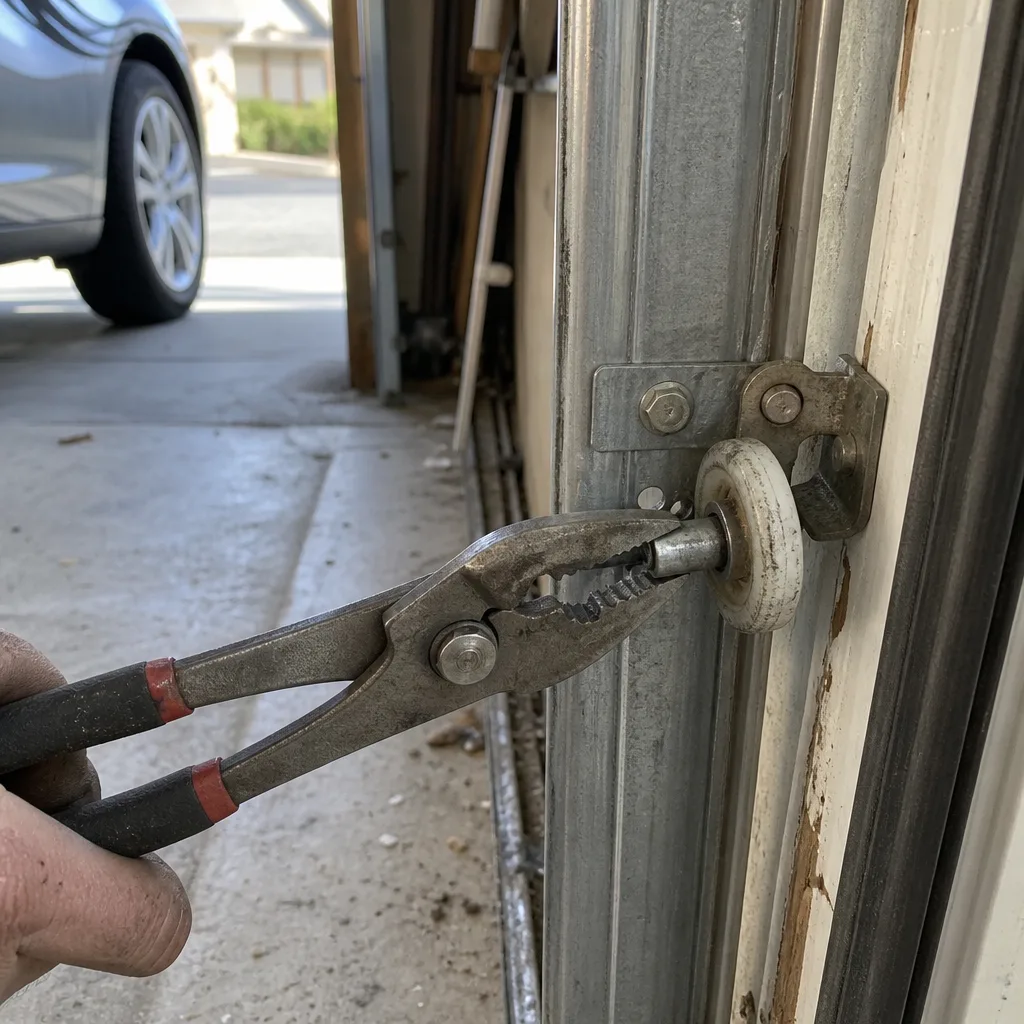
- Orange-brown dust at a roller contact point: The roller is grinding metal off the track instead of rolling. This is usually a failing roller bearing, not a track problem, but the dust accumulates on the track and makes the symptom easy to spot.
- A dark, smooth band where the track looks polished: This is wear from the roller dragging instead of rolling free. It means the track has started to wear asymmetrically, and the door is likely hanging slightly crooked.
- White oxidation on zinc-plated track brackets: Like cables, the track brackets on many doors are zinc-plated. White oxidation here is cosmetic on the bracket itself, but it’s a useful indicator of how much moisture the garage sees. If the brackets are corroded, check the cables and the bottom roller brackets too; they’re all in the same humidity environment.
One Alameda-specific note: many local garages have water heaters and laundry equipment sharing the space, which raises humidity compared to a garage that’s only used for parking. If you store wet bikes or drying laundry in the garage, expect faster oxidation on all exposed door hardware and check the cables more often.
The Sound Diagnostic: A Glossary of Garage Door Noises
The most useful thing a homeowner can do before calling for service is to listen carefully and describe the sound precisely. Not “it’s noisy,” but what kind of noise, when it happens, and where in the door’s travel it occurs. Here’s a glossary of the most common garage door noises we hear in Alameda homes, mapped to their usual mechanical causes. This is the knowledge that lets you describe the problem over the phone in a way a technician can actually use.
Grinding or Metal-on-Metal Scraping
A grinding sound usually means a roller or a hinge has failed and metal is dragging against metal. If the sound happens at the same point in every cycle, look at the roller that’s in that position when the sound occurs. The roller bearing has likely seized, and the wheel is now sliding along the track instead of rolling. On Amarr and Clopay doors with nylon rollers, a seized bearing often means the nylon wheel itself has flat-spotted. The fix is roller replacement, and the sooner the better: a flat-spotted roller will groove the track and turn a $20 part into a track replacement.
Popping or Banging From the Spring Area
A sharp pop when the door starts moving, or a bang when it stops, is often the torsion spring shifting on its shaft or the spring coils sticking and releasing. A door that has loose spring cones or a broken bearing plate will produce this sound intermittently. Popping can also come from a panel that’s been hit and has a buckle in its metal surface; as the panel flexes around the bend, it pops in and out. If the pop is rhythmic and matches the door’s roller positions, it’s probably a panel or reinforcement strut. If it’s a single sharp report, have the spring assembly inspected.
Rattling or Chattering During Travel
Rattling is most often loose hardware: a hinge bolt that’s backed out, a track bracket that’s lost a lag screw, or a decorative handle that’s come loose. On doors with steel panels and no insulation, rattling can also be the panel skins vibrating against each other where the stiles attach. A rattle that’s loud and constant might be a roller grinding through a section of track, but that will usually progress to a grinding sound. In Alameda, we see more rattling complaints in older detached garages where the building itself transmits vibration; a track bracket that’s slightly loose will sound much worse in a wood-frame garage than in an attached one with shared walls.
Squealing or High-Pitched Whine From the Opener
A squeal when the opener runs but the door doesn’t move usually means the belt or chain tensioner is slipping, or the opener’s internal gear has stripped its teeth. Chain-drive openers will show a loose chain sag. Belt-drive openers can glaze a belt that’s too tight, producing a high-frequency chirp. Some Chamberlain and Genie models also have a small plastic worm gear inside the drive head that’s a known wear item on older units; when it strips, the motor spins but the door doesn’t move, accompanied by a whining or buzzing sound.
The Balance Test and Other Checks You Can Do Safely
There are a few diagnostic checks any homeowner can perform that don’t involve touching the spring or the cables. These are the same checks a technician does at the start of a service call, minus anything that puts hands near loaded parts. If you’re not comfortable doing any of these, skip it; there’s no shame in calling someone who does this for a living.
Step 1: The Manual Balance Test
Pull the release handle with the door closed. Lift the door about waist high. Let go. A balanced door should hold its position, or move very slowly in either direction. A door that wants to fall means the spring has lost tension or is failing. A door that wants to climb means the spring is over-wound. Both conditions cause accelerated wear on the opener and the cables. This test puts only the spring tension against the door’s own weight, not against you. But do not do this test if the door is already misaligned, or if you’ve seen any of the Tier 3 spring or cable signs listed above.
Step 2: The Visual Cycle Watch
Run the door through one full open and close cycle while you watch from inside the garage. Don’t stand underneath the door. Watch the cable drums at the top. Both cables should wind and unwind evenly, without slack. Watch the rollers as they pass each track intersection. Any roller that wiggles, stops rolling, or pops out of line is a failing bearing. Watch the panels as the door goes around the curve. Any panel corner that separates from the one next to it means a hinge is loose or a panel is cracked.
Step 3: The Photo Eye Check
The photo eyes at the bottom of the door tracks prevent the door from closing on a car, a kid, or a package. Check their alignment by looking for the small LED light on each eye; most openers show a solid light when they’re aligned. A blinking light often means misalignment or sun interference. If your Alameda garage faces west and gets strong afternoon sun, photo eyes can be blinded by direct sunlight. The opener will refuse to close, or will reverse as soon as it starts down. This is a common “warning sign” that turns out to be entirely environmental. Realigning the eyes, or adding a small sun shield, resolves the phantom reversal.
Step 4: The Track Visual Scan
Run your eyes along both vertical and horizontal tracks. Look for bends, gaps where sections join, or bolts that have come out. A track that’s pulling away from the wall at any bracket is under sideways load and will only get worse. Alameda garages built on slab foundations settle slowly over time, and a vertical track that was true when installed can develop a radius or kink if the wall moves. This is one of those warning signs that shows up as a door that binds at the same point every cycle for no obvious reason.
Common Mistakes to Avoid
- Lubricating the spring with penetrating oil. Torsion springs coil against each other; oil between the coils attracts dust and can make the spring bind. The only spring maintenance is inspection. Lube the rollers and hinges, not the spring.
- Ignoring a reversal because it “only happens sometimes.” A door that reverses intermittently near the floor often means the limit setting has drifted. The next phase is a door that doesn’t close at all. Intermittent is not harmless.
- Replacing one spring on a two-spring door. Torsion springs are rated as a matched pair. If one has failed, the other is at the end of its life. Replacing only the broken one creates an unbalanced door and shortens the life of both.
- Tightening a track bolt that’s “just a little loose.” Tracks are bolted to the wall and to each other. Tightening a wobbling track without checking whether the track itself has shifted can lock in a misalignment. The door will bind, and you’ll have traded a rattle for a bigger problem.
- Calling the manufacturer first. Manufacturer support lines typically read from scripts and recommend calling a local dealer. For a garage door that’s already failed, the local company is faster and can look at the actual door, not a model number spoken over the phone.
- Assuming the opener is the problem when the door is heavy. If the door is hard to lift by hand, the opener is doing double duty. Replacing the opener won’t fix a failing spring, and it’ll burn out the new opener’s motor in short order.
- Waiting for the next service “since it’s working okay right now.” Most Tier 3 failures happen with little or no additional warning. The cable that looks frayed today is the cable that snaps next week. The window between “I should call someone” and “the door is on the floor” is often measured in days, not months.
When to Call a Professional
Any Tier 3 warning sign means a professional call before the next use: a visible coil gap in the torsion spring, frayed or kinked cables, a door that drops during the balance test, or a door that’s cocked sideways in its tracks. Tier 2 signs deserve a call as soon as convenient: persistent new noises, slowing operation, reversal issues that aren’t photo-eye related, or visible roller and hinge wear. Cosmetic Tier 1 issues can wait until you’re ready, but they’re cheaper to address before they affect moving parts. Oakridge Garage Door Service offers free estimates in Alameda – call (855) 341-8689. We answer 24/7. Fast dispatch from 7am to 7pm, Sunday through Friday.
See the difference
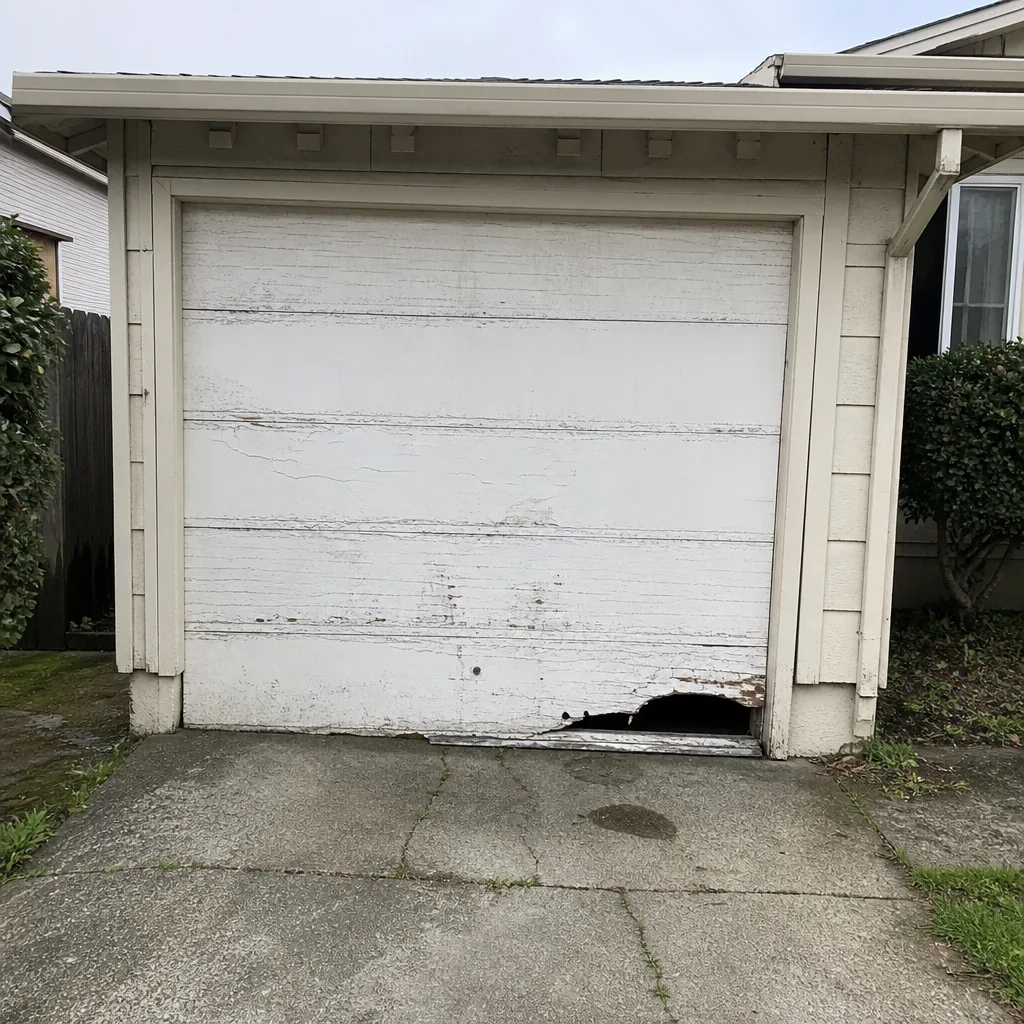 Before
 After
 Before
 After
 Before
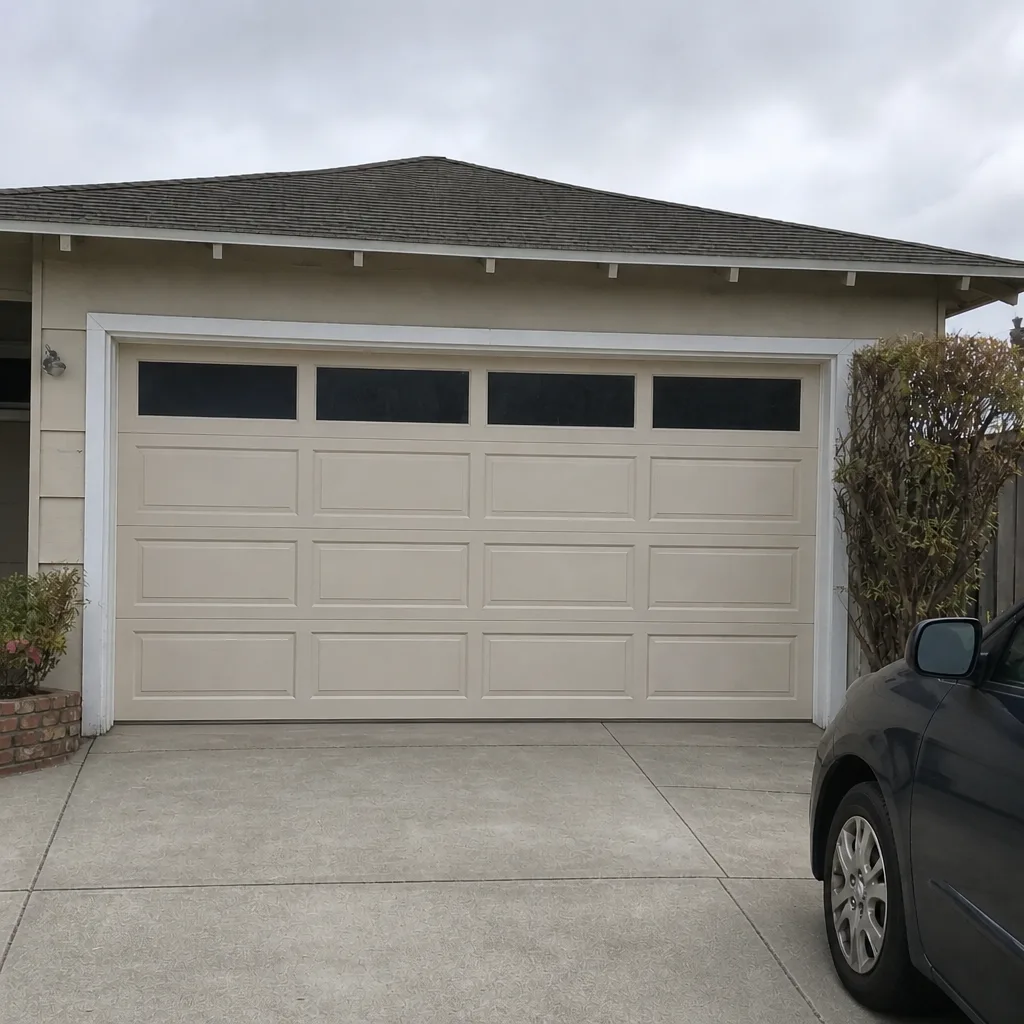 After
Frequently Asked Questions
The most reliable visual warning signs are a gap between two or more coils, pitting rust that has eaten into the spring steel, or a visible bowing of the spring when the door is closed. A spring near the end of its life often gets noisy too, producing a popping sound when the door transitions between wind and unwind. If you see any of these, don’t run the door again until a professional has looked at the spring. Call (855) 341-8689 for a free estimate.
The most common causes are a drifted limit switch, photo eye interference, or a misaligned safety sensor. In Alameda, west-facing garages can trigger phantom reversals from direct afternoon sunlight hitting the photo eyes. If the door reverses immediately after touching the floor, it’s usually a limit setting. If it starts down and reverses before reaching the floor, check the photo eyes first. Our opener repair service covers the full range of control and limit adjustments.
No. Torsion springs hold enough stored energy to cause serious injury if a winding bar slips or a cone breaks. This is not a project that rewards careful amateurs; it punishes them. Even among professionals, spring work is treated with respect and specific tools. If your spring is worn or broken, call garage door repair from a company that handles jobs like this every week.
It usually means the opener’s drive system has disconnected from the door: a stripped internal gear, a broken belt, a loose chain, or a disconnected carriage. On some Chamberlain and Genie models, a plastic worm gear inside the motor housing is the failure point. The door itself may be perfectly fine. A technician can confirm in minutes whether it’s a drive component or something deeper.
Once a year is a reasonable interval for most doors. The springs, cables, rollers, hinges, and opener all have wear items that show aging before they fail. An annual check catches things like stretched springs and worn cables while they’re still planned repairs rather than urgent ones. For doors that see heavy daily use, or that are more than ten years old, twice a year makes more sense.
We work across eight major manufacturers, including the big names you’re most likely to have: LiftMaster, Chamberlain, Genie, Clopay, Amarr, Wayne Dalton, Craftsman, and Raynor. The brand of door and opener already installed at your house is the brand we service. Door and opener, handled together, so you don’t end up coordinating between two separate companies. Call (855) 341-8689 and describe what the door is doing; we’ll take it from there.
The Bottom Line
Garage door warning signs exist on a spectrum, and understanding where a symptom falls is the difference between a quick fix and a dangerous failure. Most cosmetic issues can be monitored. Most functional issues should be scheduled before they compound. Anything involving the counterbalance system, cables, or a door that won’t hold position is an immediate safety hazard; stop using the door and call for service. Alameda’s climate adds moisture-related wear concerns to cables and tracks, so older doors benefit from a professional inspection even when nothing seems wrong. When in doubt, describe what you’re seeing or hearing over the phone. A good technician will tell you honestly whether it’s urgent, and why.
Written by the team at Oakridge Garage Door Service, serving Alameda since 2015.