
Last updated November 4, 2026
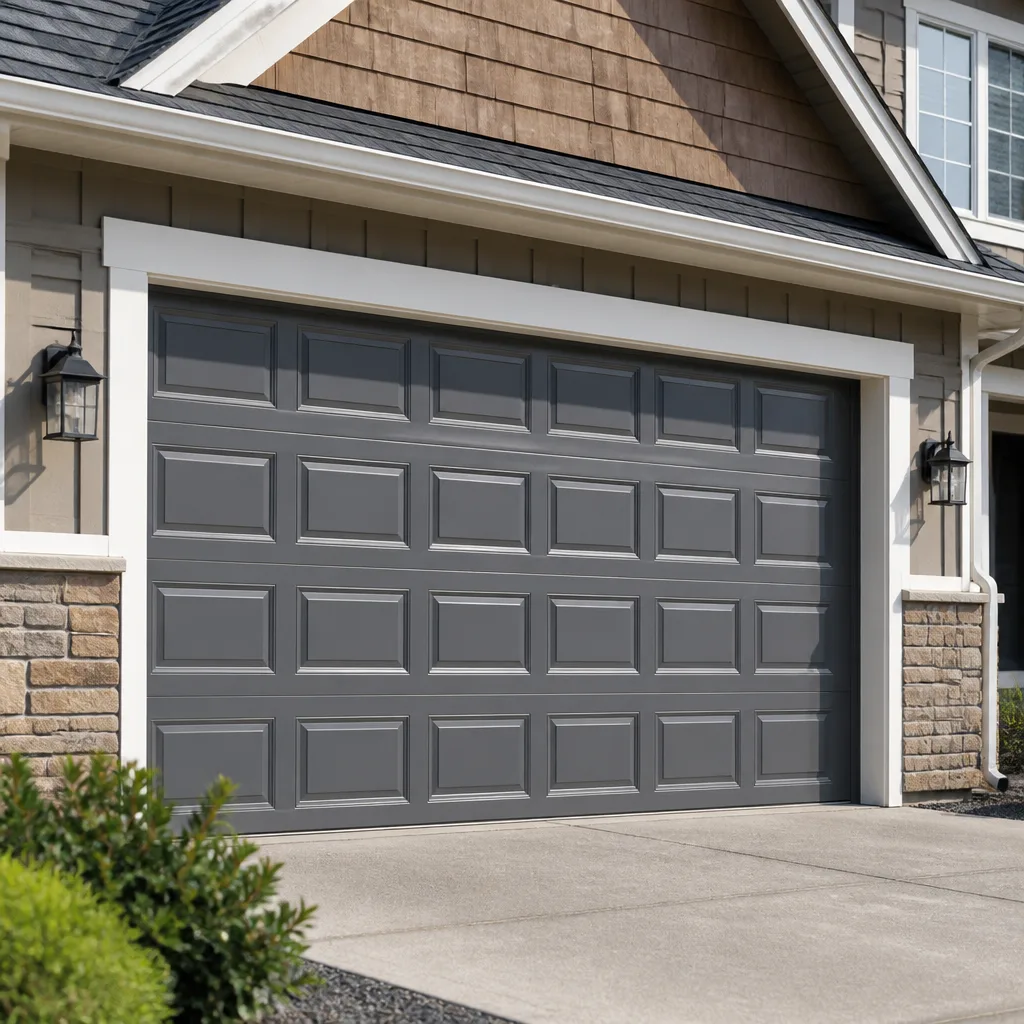 Raised-panel steel
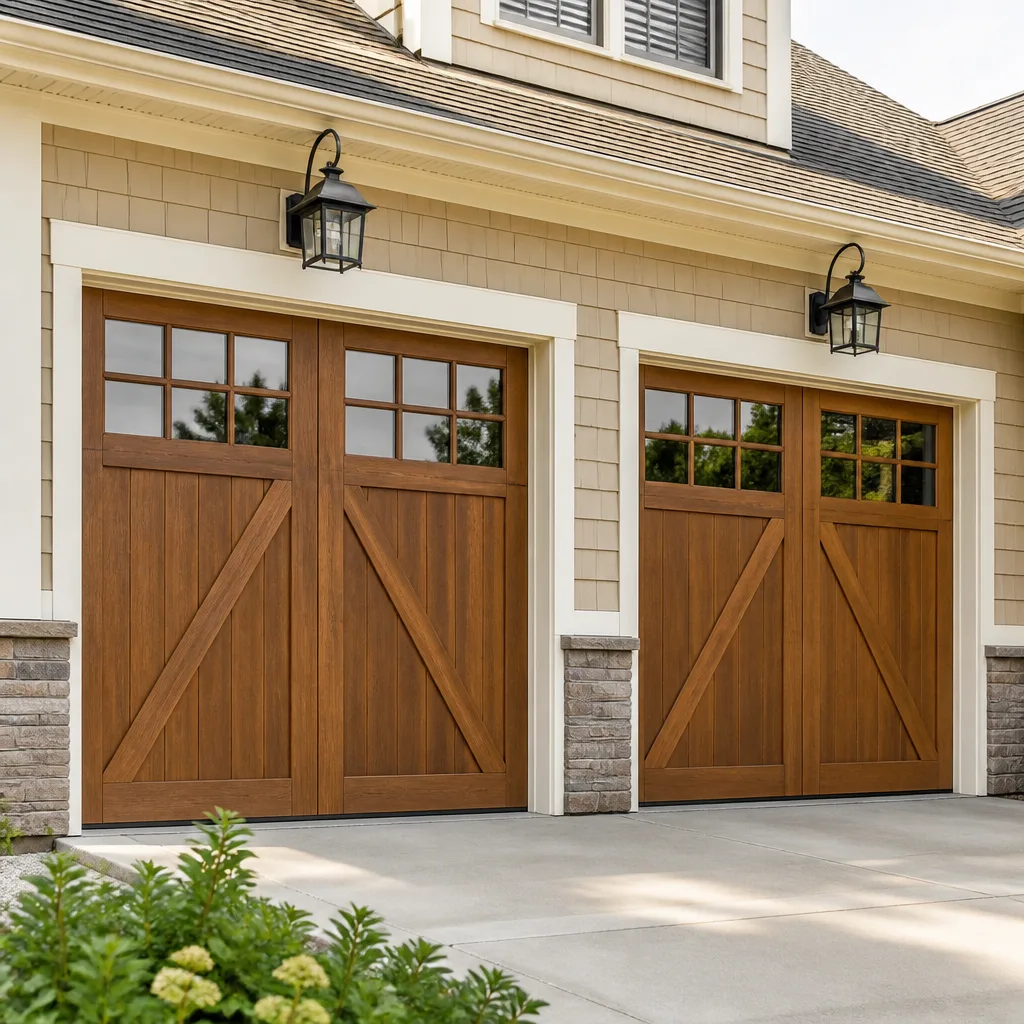 Carriage house
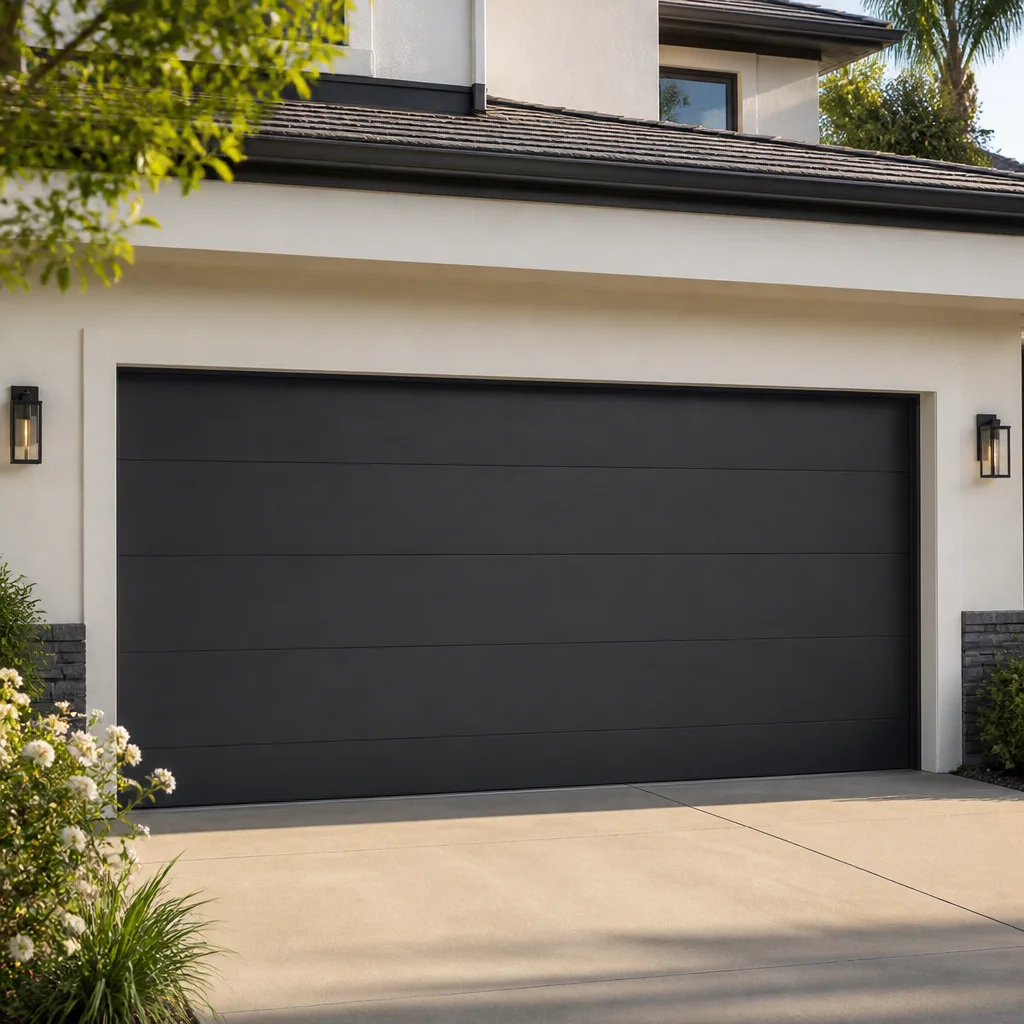 Modern flush
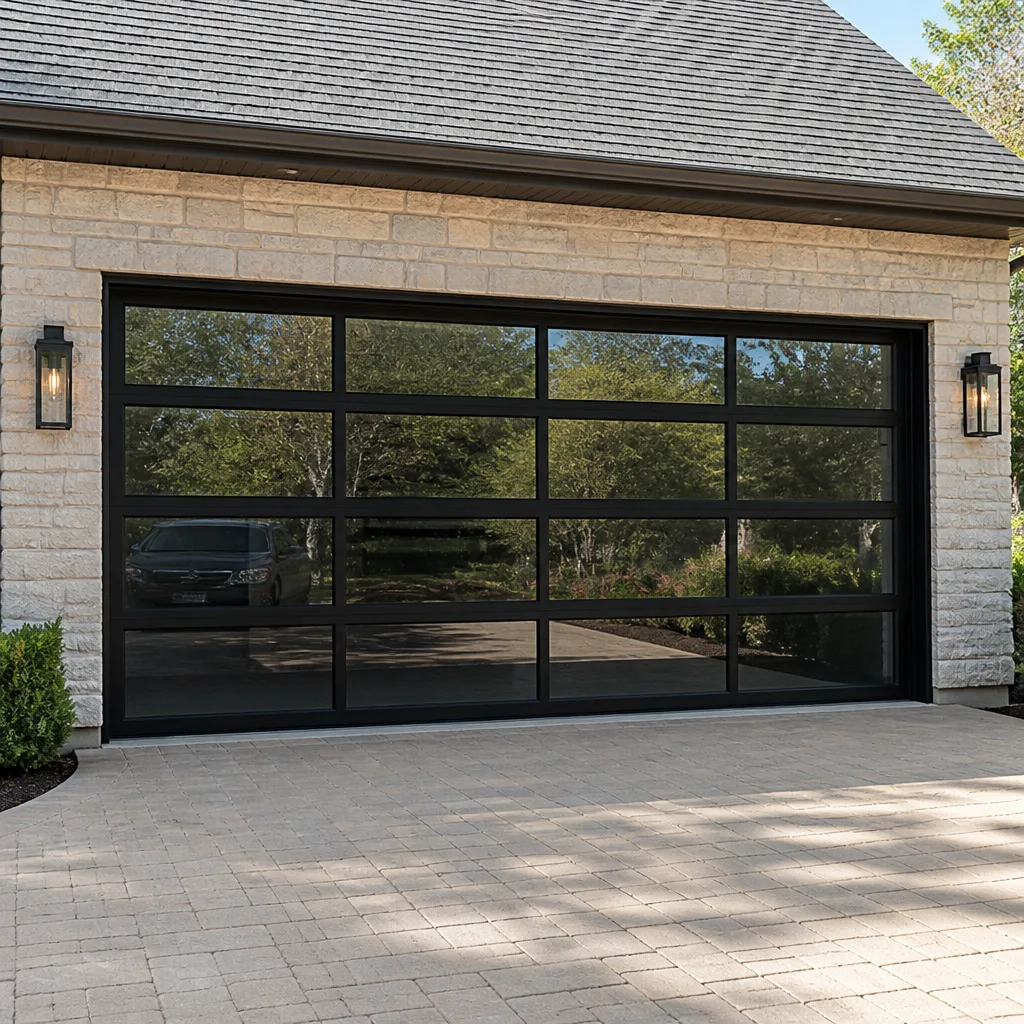 Full-view glass
 LiftMaster openers
 Chamberlain openers
Full 25-point door and opener safety check with every visit - springs, cables, rollers, tracks, and your LiftMaster or Chamberlain opener included
You get a price before we start. It does not change when the truck arrives.
Get your free estimateGarage Door Cost Breakdown: The Alameda Homeowner’s Reference for 2026
Ask three Alameda homeowners what a new garage door costs and you’ll get three wildly different numbers. One paid $1,400. Another paid $2,200. Both are sure they got a fair deal. Here’s what most people miss: the bids weren’t for the same job. A garage door is a system, not a slab, and the difference between a bare-bones quote and a complete one in Alameda is usually found in the line items nobody reads until something fails. This guide breaks down what those line items are, what they should cost here in 2026, and how to read a quote like someone who actually installs doors for a living. You’ll learn the component-by-component pricing, the coastal hardware upgrades that legitimately belong in an Alameda bid, and the repair-versus-replace math that saves homeowners from throwing money at a door that’s already done.
Quick Answer
A full garage door replacement in Alameda typically runs $1,600 to $3,800 in 2026, including the door, hardware, tracks, labor, and disposal. A single spring replacement runs roughly $180 to $340, and a new opener adds $400 to $900 including installation. The exact price depends on door weight and size, hardware corrosion packages, and whether the existing opener can handle the new door’s weight class.
Styles & brands we work with
- Raised-panel steel
- Carriage house
- Modern flush
- Full-view glass
- LiftMaster openers
- Chamberlain openers
Table of Contents
- Component-by-Component Cost Breakdown for 2026
- The Coastal Hardware Premium: What Belongs in an Alameda Quote
- Repair vs. Replace: The Age and Failure Math
- Opener Upgrade Economics: When a New Door Forces a New Opener
- How to Read a Garage Door Quote Like a Contractor
- What a Proper Installation Actually Includes
- Common Mistakes to Avoid
- When to Call a Professional
- Frequently Asked Questions
Component-by-Component Cost Breakdown for 2026
Every garage door quote, whether it’s for repair or replacement, is really a sum of smaller parts. Understanding what each piece costs keeps you from paying for a “package” that hides inflated markup on one line while under-specifying another. Here’s what we see across Alameda’s residential market in 2026, from the Gold Coast’s older carriage doors to the track homes near Bay Farm Island.
- Door panel (single, 8×7 standard steel): $700 to $1,600. Insulated steel panels run higher; wood and composite doors start around $2,000 and climb with finish work.
- Door panel (double, 16×7 standard steel): $1,100 to $2,700. Weight goes up, hardware requirements change, and the price follows.
- Springs (pair): $340 to $680 for both. A single spring is $180 to $340, but springs are replaced in matched pairs because the old one has lost tension and the new one would carry an unbalanced load.
- Tracks, rollers, and hinges: $250 to $500. These wear together and are usually replaced as a set when the door comes down.
- Opener (belt or chain drive): $400 to $900 installed, depending on horsepower, drive type, and whether new wiring or mounting reinforcement is needed.
- Installation labor: $400 to $900 for a full door swap. This covers removing the old door, hanging the new one, tensioning the springs, aligning the tracks, and adjusting the opener.
- Disposal and haul-away: $75 to $150. Some companies roll this into the total; others list it separately. If it’s not on the quote, ask.
- Weatherstripping and threshold seal: $60 to $180. This is the line item that gets skipped most often and matters most in Alameda’s damp, windy months.
These are typical ranges, not fixed prices. Your written estimate sets the actual number before any work begins. The point is that anyone who quotes a “garage door” as one line item is either rolling things in without telling you, or planning to add them later as change orders.
The Coastal Hardware Premium: What Belongs in an Alameda Quote
Here’s the part most guides skip. Alameda sits on an island in the San Francisco Bay. The air is humid year-round, the winter winds off the bay push moisture into every gap, and the fog does to untreated hardware what time does to everything else. A door quoted for an inland city like Sacramento doesn’t need the same hardware spec. An Alameda door absolutely does. This is the single biggest reason two quotes for the same door can differ by several hundred dollars, and it’s also why the “cheaper” door often costs more within three years.
What should appear on a thorough Alameda quote that wouldn’t show up 90 miles inland?
- Galvanized or coated track and bracket hardware: Standard zinc-plated hardware rusts faster in bay air. Galvanized components add $80 to $200 to a full door job but double the effective life of the hardware.
- Stainless steel cables: Lift cables take serious tension and sit in a damp environment. Stainless costs $40 to $100 more than galvanized cable and is the difference between a cable that frays at year six and one that runs another decade.
- Foam-backed or vinyl weatherstripping: The bottom seal and the side seals need to actually hold up to wind-driven moisture. Cheap rubber seals crack and let water pool at the threshold. Proper seals run $60 to $180 and should be line-itemed.
- Rust-inhibiting primer on the door’s bottom edge: The bottom panel is the first place water wicks up. A treated bottom edge is a small detail that shows up on quotes from installers who work in bay-area conditions, not national averages.
If a quote in Alameda is suspiciously low, look for these lines. If they’re missing, ask why. The answer tells you whether you’re talking to someone who installs doors here or someone who installs doors anywhere.
Repair vs. Replace: The Age and Failure Math
The hardest call for most homeowners isn’t which door to buy. It’s whether to keep the one they have. We see this decision made badly in both directions: people replacing doors that needed a $200 spring, and people pouring $500 of repairs into a door that was structurally finished. Here’s the logic we use when we walk an Alameda homeowner through the decision.
Start with age. A steel sectional door in bay-area conditions has a practical service life of 15 to 20 years before corrosion, panel fatigue, and hardware wear start compounding. If your door is under 10 years old and the failure is a spring, a cable, or a single panel, repair is almost always the right call. The door’s structural life is still ahead of it. If the door is over 20 years old and you’re looking at a snapped spring plus rusted tracks plus worn hinges, you’re not fixing a problem, you’re financing the next one.
The more useful math is component-specific:
- Single spring failure on a door under 12 years old: Replace both springs, $340 to $680. Don’t replace the door for a spring. That’s the cheapest repair on the list.
- Torsion tube or center bearing failure: $250 to $500. Still worth it on any door with good panels and a working opener.
- Two or more panels rusted through or warped: $300 to $700 per panel. At that point you’re within sight of a new door and you should get a replacement quote to compare honestly.
- Opener dead, door fine: Replace the opener only, $400 to $900. Don’t let anyone talk you into a new door because the opener failed. They’re different systems.
- Door aged out, opener still under 5 years old: A new door can often reuse the existing opener if the weight class matches. A good installer checks this before adding an unnecessary $600 to the quote.
The $400 threshold matters. If a repair costs more than about a third of a replacement door and the door is already past the midpoint of its service life, replacement is the better money. Below that threshold, fix the component and let the door ride.
Opener Upgrade Economics: When a New Door Forces a New Opener
This is the line item that catches people off guard. You budget for a door. The quote comes back with an opener on it. You didn’t need an opener. Now you’re annoyed. But sometimes the opener genuinely has to go, and it’s not because anyone is upselling you.
Opener compatibility depends on two things: weight class and clearance. Modern doors with higher insulation ratings weigh more than the builder-grade doors they replace. If your existing opener is a 1/2-horsepower chain drive from the early 2010s and your new door is a double-insulated steel model, the opener may not be rated for the load. Running it anyway burns out the motor gear and the travel module within a year or two. The cost of a replacement opener at that point is the same $400 to $900 it would have been during the door install, plus a second service call.
Header clearance is the other trigger. Older Alameda homes, especially the bungalows and Mediterranean-style houses built before 1960, often have low garage headers. Some modern openers don’t fit the available clearance without track reconfiguration or wall-mount conversion. A wall-mount opener runs $550 to $950 installed and is sometimes the only clean option on a tight header.
What does this add to a project? Figure $400 to $900 if the opener is replaced along with the door, or $550 to $950 for a wall-mount unit. The right installer tells you during the measure, not after the door is hung. garage door opener repair is a separate service and a separate line item, but the compatibility assessment should be part of any full door quote.
One thing we emphasize with Alameda customers: don’t let the opener decision get buried. Ask whether the new door’s weight is within the existing opener’s rating. Ask about header clearance. If the answer is vague, get it in writing or get another opinion.
How to Read a Garage Door Quote Like a Contractor
Most quotes are designed to be skimmed. A contractor can tell within thirty seconds whether a bid is thorough or whether it’s a lowball waiting to become a change-order conversation. Here’s how to make the same read.
First, look for specificity. A thorough quote lists the door by brand and model or at least by material, size, insulation value, and panel construction. “16×7 steel door” is not enough. “16×7 Clopay Gallery steel, 2″ Intellicore insulation, white, short panel” is a real scope. If the quote can’t name the product, you can’t compare it to anything.
Second, check the hardware line. Springs, cables, tracks, hinges, and rollers should appear as distinguishable items or as a clearly stated hardware package. If the quote only says “door + install,” ask what hardware is included. A $250 set of hardware can be cut to $80 of hardware and you’d never know until a cable frays.
Third, look for these specific phrases or their absence:
- “Includes haul-away and disposal” – If it’s not there, you’re leaving the old door in your driveway or paying a surprise $100.
- “Includes spring tension and balance adjustment” – This is standard on a full install. If it’s listed as an extra, that’s a red flag.
- “Includes opener compatibility check” – This is the line that separates a door installer from someone who only hangs panels.
- “Includes weatherstripping replacement” – In Alameda, this should be automatic. If it’s absent, the installer isn’t thinking about the local environment.
The best test is the question test. Call and ask about a specific line. A real installer explains it. A low-bid shop gets defensive or vague. The quote is a document, but the conversation around it tells you more.
What a Proper Installation Actually Includes
Installation isn’t just unbolting the old door and bolting on the new one. A proper full-door install in Alameda is a sequence of adjustments that affects how the door feels, sounds, and seals for its entire life. Here’s the step-by-step of what should happen, in order.
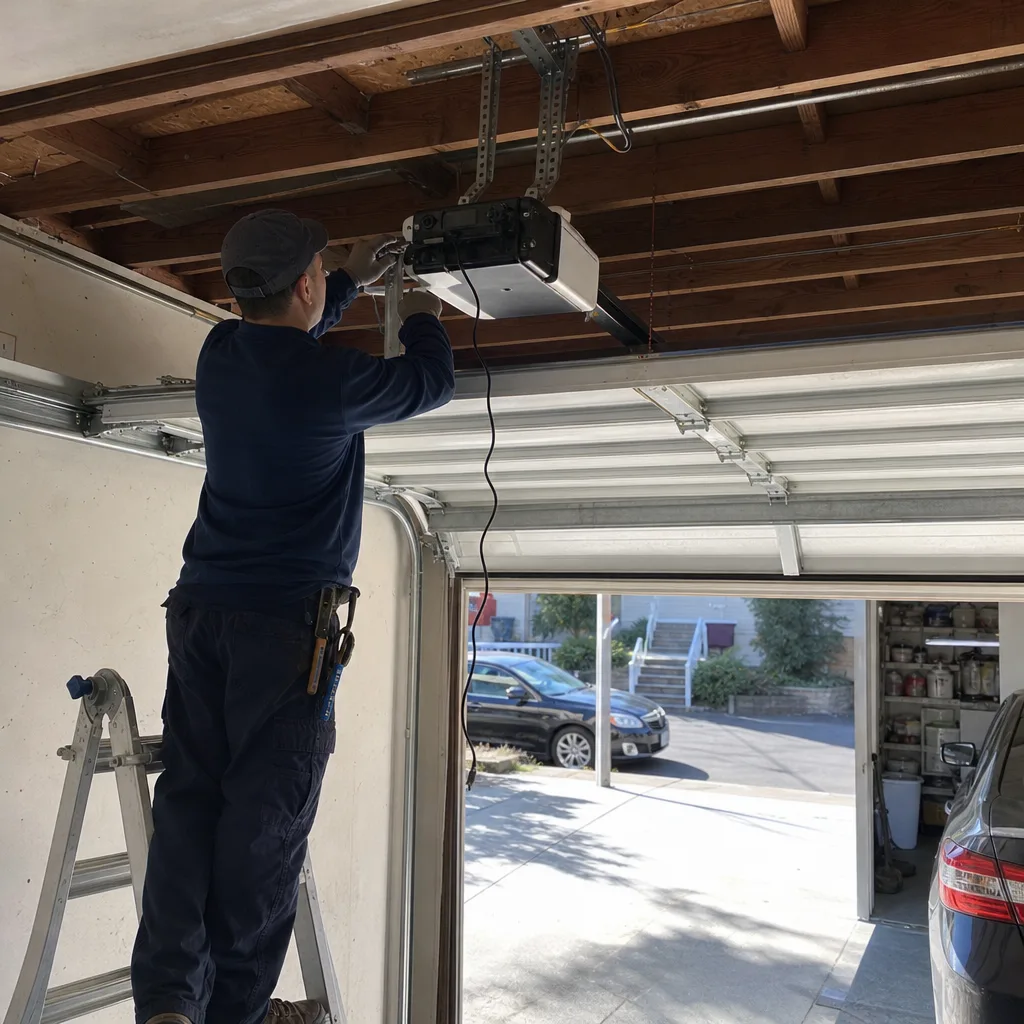
- Old door removal and track teardown: The old panels, tracks, springs, and cables come down. This takes 45 minutes to two hours depending on the condition of the old hardware and how much corrosion has set into the brackets.
- Header and jamb inspection: Before anything new goes up, the mounting points get checked. Rotted wood at the jambs is common in older Alameda garages and needs to be addressed before new tracks are anchored, or the tracks will sag.
- New track installation: Vertical and horizontal tracks go in first, leveled and aligned. On low-header garages this is where the installer makes the call on radius adjustment.
- Panel assembly and stacking: Panels go up one at a time, starting at the bottom. Hinges are installed as the sections stack, and the bottom weatherstripping goes on before the panel is seated in the opening.
- Spring installation and tensioning: This is the part that hurts people who try it themselves. High-tension torsion springs store enormous energy. A pro has the winding bars, the training, and the respect for the task. This is never a DIY step.
- Cable and drum adjustment: The lift cables run through the drums at each end of the torsion tube. They have to be balanced so the door lifts evenly. An unbalanced cable means a door that cants and binds.
- Track alignment and roller adjustment: The rollers get seated in the track, and the track is adjusted so the door moves smoothly through the full travel. This is where squeaks and rattles get tuned out.
- Opener hookup and force testing: The opener arm connects to the door and the travel limits are set. The unit is tested under load, and the auto-reverse safety feature is confirmed.
- Balance check and final adjustment: The door is run up and down several times with the opener disconnected to verify it balances at mid-travel. A properly balanced door stays put when opened halfway. If it creeps or drops, the springs need re-tensioning.
- Cleanup and walkthrough: The old door is loaded for disposal, the work area is swept, and the installer walks through the final operation with you.
This sequence is the same whether the door is a new garage door repair job after storm damage or a planned replacement. The difference is in what gets replaced versus salvaged. The standards shouldn’t change.
Common Mistakes to Avoid
- Buying the door before the measure. Ordering a door online or from a big-box catalog without a professional measure means discovering too late that the rough opening isn’t standard or the header clearance is wrong. Measure first, then purchase.
- Ignoring the hardware spec to save $150. In Alameda’s damp bay air, standard non-galvanized hardware becomes a rust problem within a few years. The savings disappear the first time you pay for hardware replacement on a door that’s otherwise fine.
- Replacing an opener when the door is the problem. If the door is heavy, unbalanced, or binding, a new opener won’t fix the issue. It’ll just burn out trying to lift a door it was never designed to compensate for. Diagnose the door first.
- Replacing a door when only a spring failed. A snapped spring on an otherwise healthy door is a $340 to $680 repair, not a $2,500 replacement. Get the door assessed, not just quoted for replacement.
- Accepting a quote with no hardware line items. “Door + install” isn’t a scope. You need to know what springs, cables, tracks, and seals are included. Otherwise the low price is a number without a job attached.
- Skipping the opener compatibility conversation. A new insulated door can exceed the load rating of an older opener. Ask before the door goes in, or budget for a surprise opener replacement later.
- Choosing based on the lowest number alone. A $1,400 quote and a $2,200 quote for the “same” door usually aren’t for the same door system. Read the lines, not just the total.
When to Call a Professional
Some projects are genuinely DIY-appropriate: replacing weatherstripping, tightening hinge bolts, lubricating rollers. Others are not, and the line between them is sharper than most people expect. Anything involving torsion springs is a professional job, full stop. The stored energy in a wound torsion spring can release violently and cause serious injury. Same goes for any work that requires taking tension off the lift cables. If the door is off its track, if the springs are broken, or if the door is binding under opener load, stop using it and call someone who does this work every day.
Oakridge Garage Door Service offers free estimates in Alameda. Call (855) 341-8689 and we’ll walk you through the actual condition of your door and the real numbers, not a guess. We answer 24/7. Fast dispatch from 7am to 7pm, Sunday through Friday.
Frequently Asked Questions
A full garage door replacement in Alameda typically costs $1,600 to $3,800 including the door, hardware, tracks, labor, and disposal. The final price depends on door size, insulation level, coastal hardware upgrades, and whether your existing opener can be reused. Call (855) 341-8689 for a written estimate – the estimate is free and the price is set before any work begins.
Alameda’s bay-side location means quotes should include galvanized hardware, stainless steel cables, and upgraded weatherstripping that inland installations don’t require. These corrosion-mitigation items realistically add $180 to $450 to a full door job and are the main reason a thorough Alameda quote runs higher than a comparable Sacramento bid.
Repair your door if it’s under 12 years old and the failure is a spring, cable, or single component, since those repairs cost $180 to $680 and the door still has structural life left. Replace the door if it’s over 20 years old, multiple panels are rusted or warped, or the repair costs more than about a third of the replacement price. A diagnostic review is the only way to know for sure.
A new garage door opener in Alameda runs $400 to $900 installed for a standard belt or chain drive unit, and $550 to $950 for a wall-mount opener on garages with low header clearance. The opener must be rated for the weight of the door it’s lifting, so the door weight needs to be confirmed before the opener is selected.
Not always. If the new door is within the existing opener’s weight rating and the header clearance is adequate, the current opener can be reused. If the new door is heavier, typically because of added insulation, or if the opener doesn’t fit the available header space, a new opener becomes necessary. A proper measure and compatibility check answers this before the door is ordered.
The written estimate sets the price before any work begins, and no surprise line items get added mid-project without your approval. On a full door replacement, the only time a price changes is if the measure reveals a structural issue that couldn’t be seen before teardown, and that gets discussed with you first. Call (855) 341-8689 to get a free estimate with a full line-item breakdown.
The Bottom Line
The cost of a garage door in Alameda is really the cost of several decisions bundled into one invoice. The door itself is the headline number, but the hardware spec, the opener compatibility, and the quality of the installation determine what that door actually costs over its lifetime. A $1,400 quote isn’t automatically a deal, and a $2,200 quote isn’t automatically padded. Read the lines. Ask about galvanized hardware and stainless cables. Confirm the opener is rated for the door. And get a written estimate that sets the price before the work begins. That’s how you pay for a door once instead of paying for it twice.
Oakridge Garage Door Service handles the whole system – door and opener – across eight major brands including LiftMaster, Chamberlain, Genie, Clopay, Amarr, Wayne Dalton, Craftsman, and Raynor. If you’re in Alameda and want a straight answer about what your door needs and what it costs, call (855) 341-8689. We answer 24/7. Fast dispatch from 7am to 7pm, Sunday through Friday. Oakridge Garage Door Service has been serving Alameda since 2015.
Written by the team at Oakridge Garage Door Service, serving Alameda since 2015.
See the difference
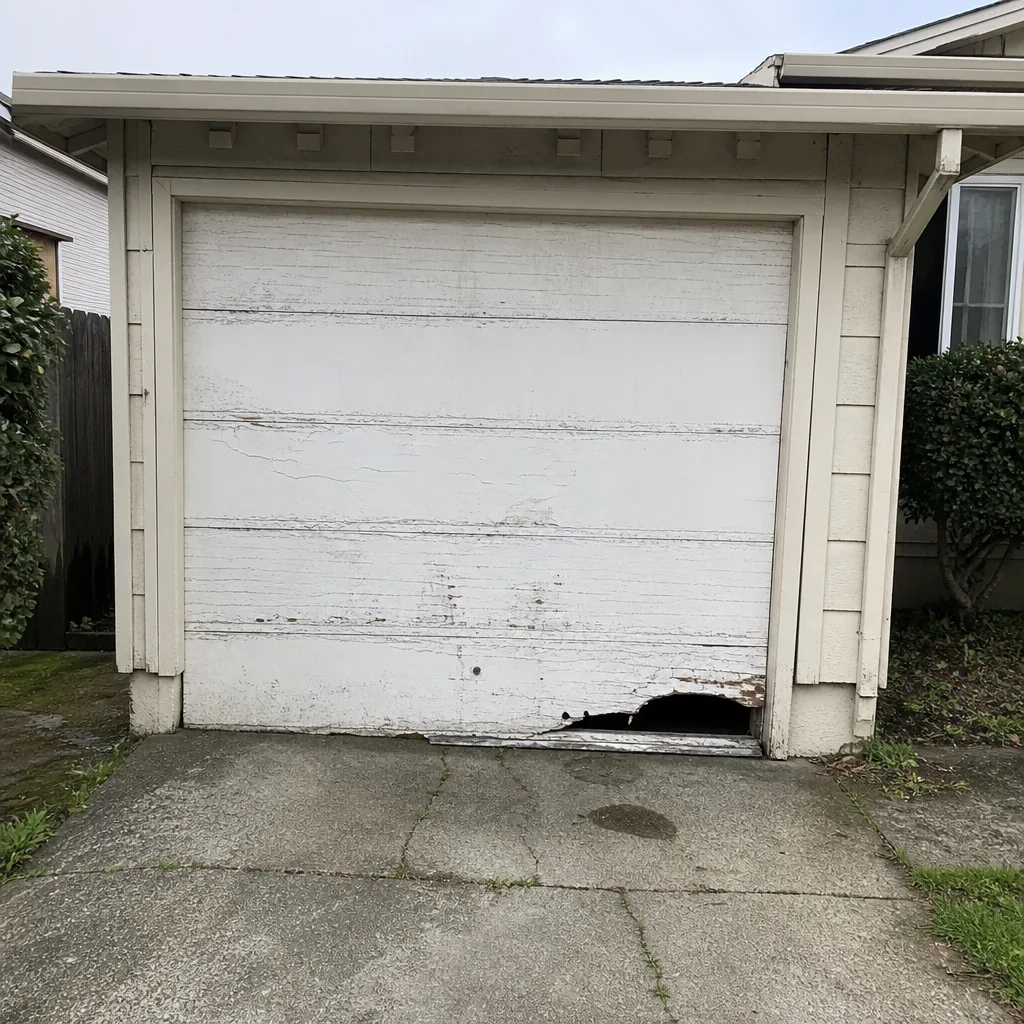 Before
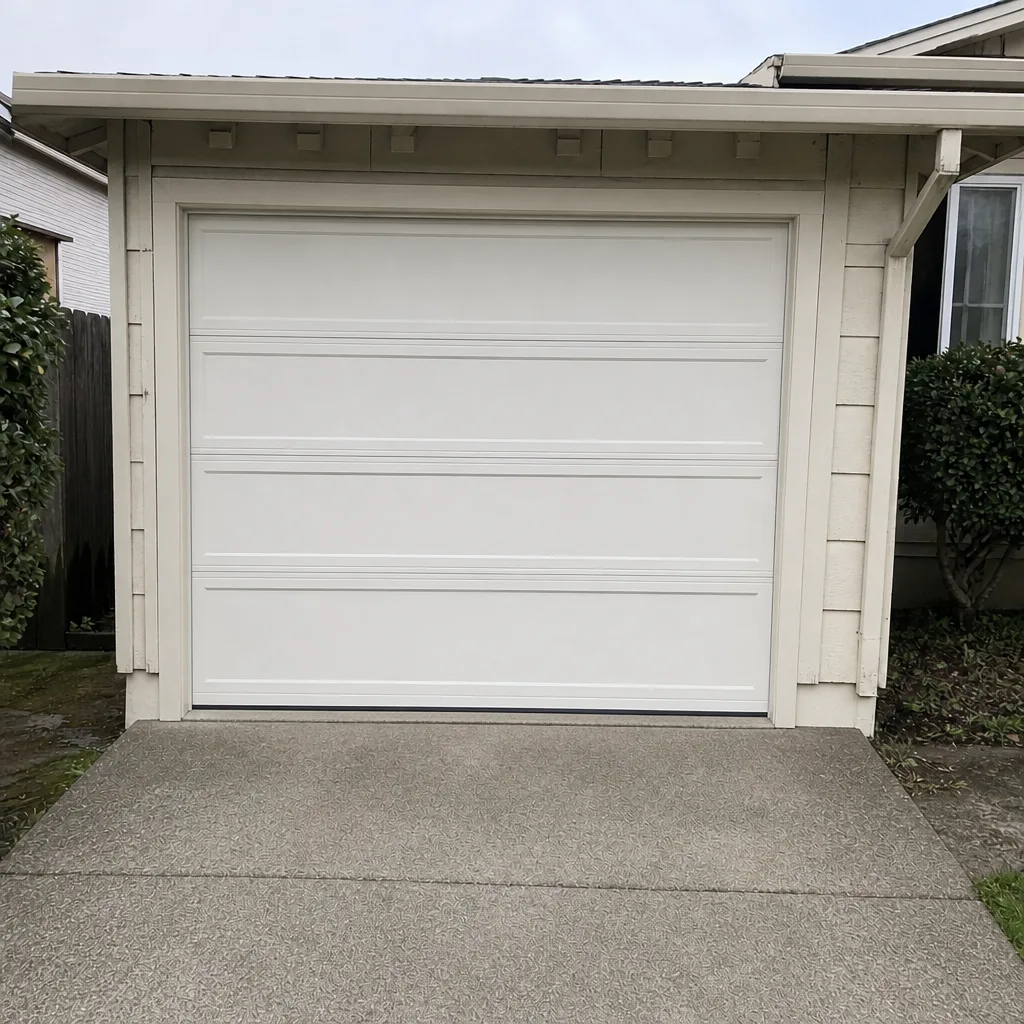 After
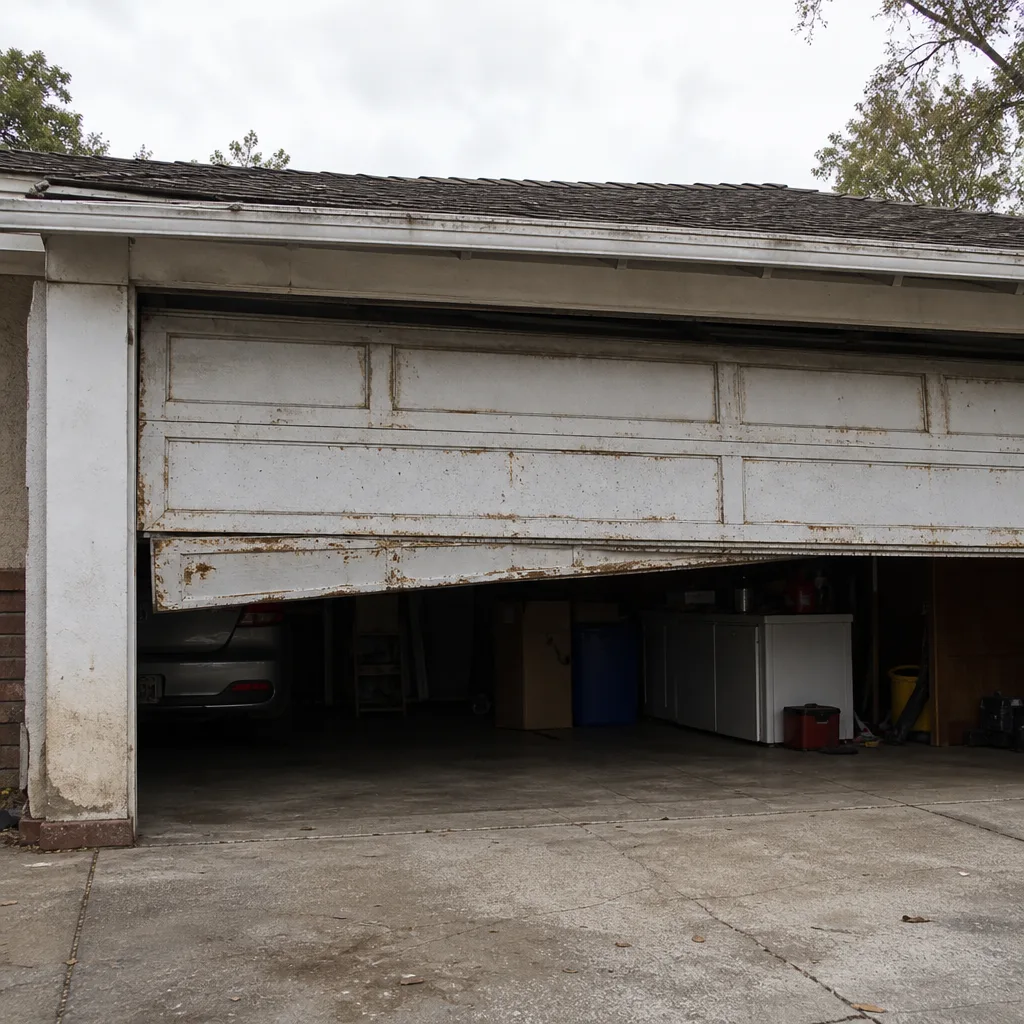 Before
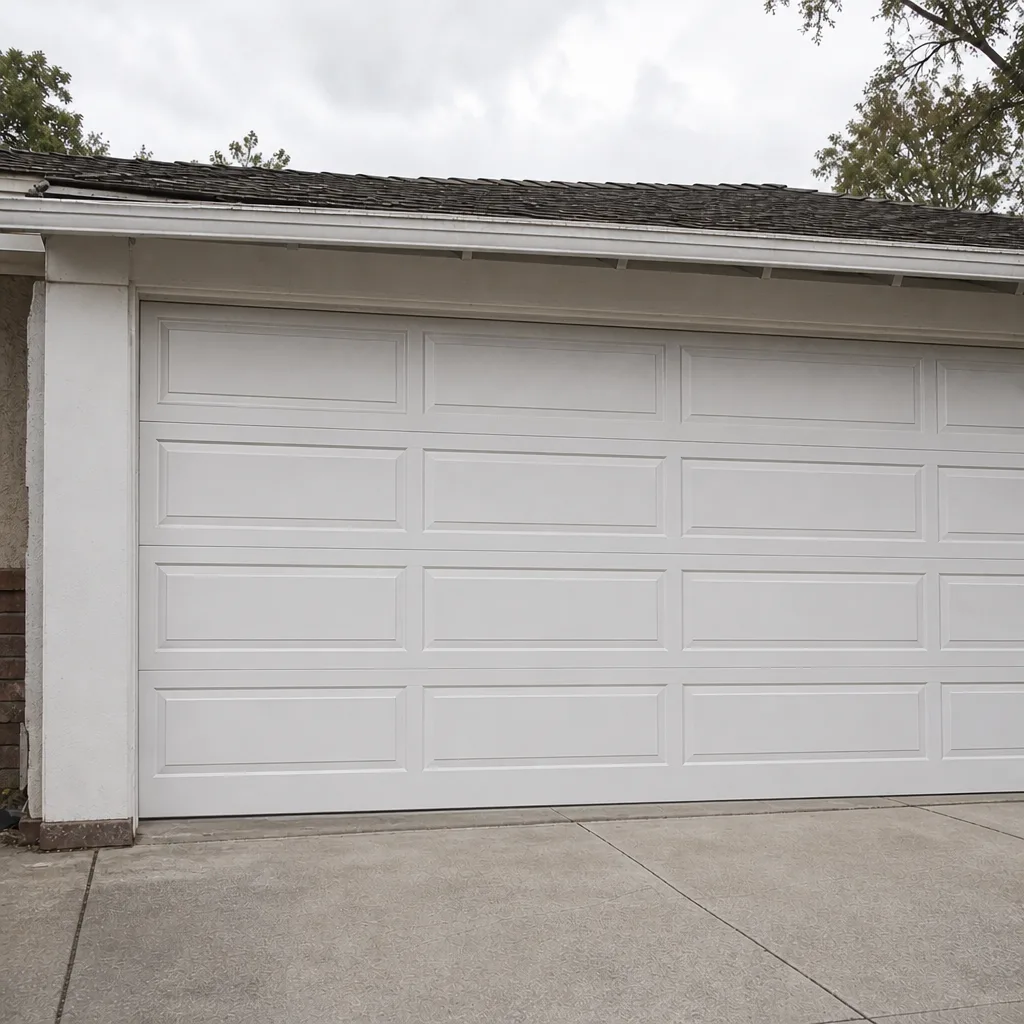 After
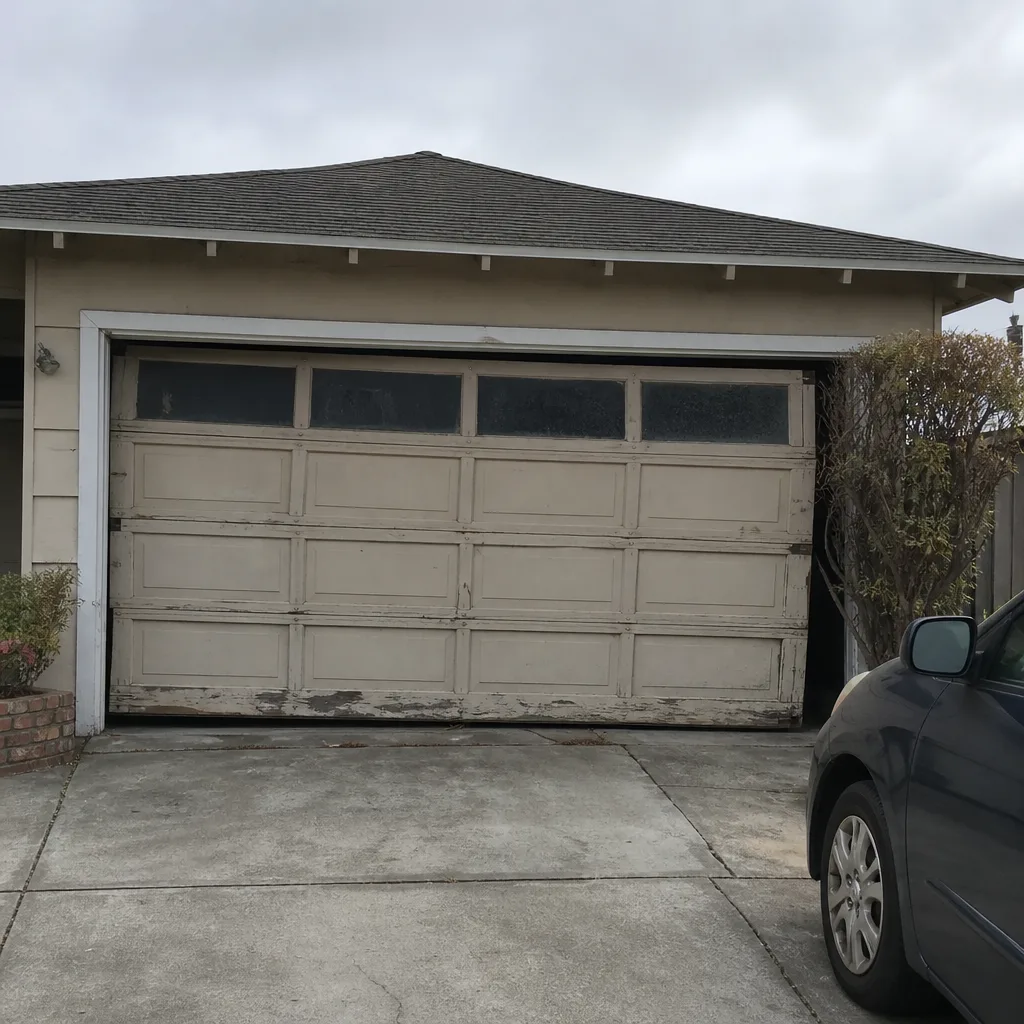 Before
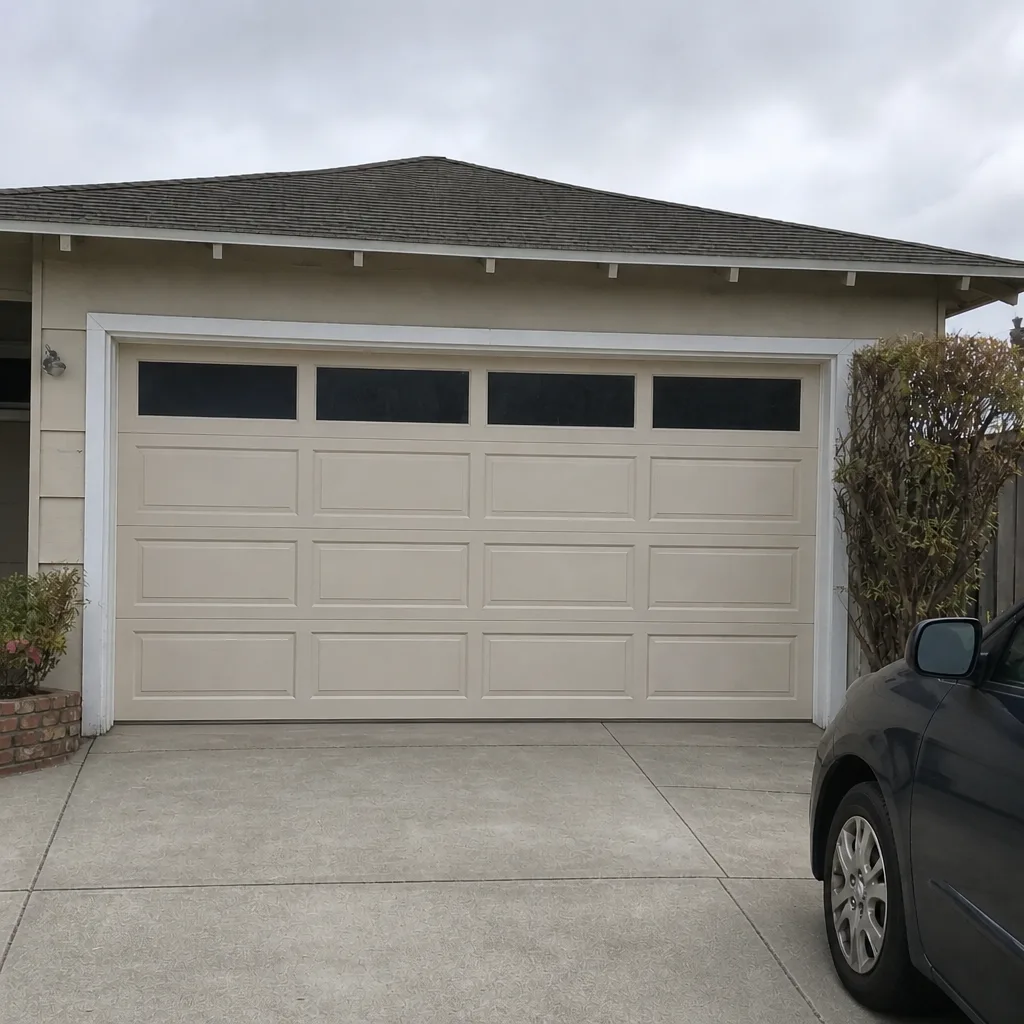 After