
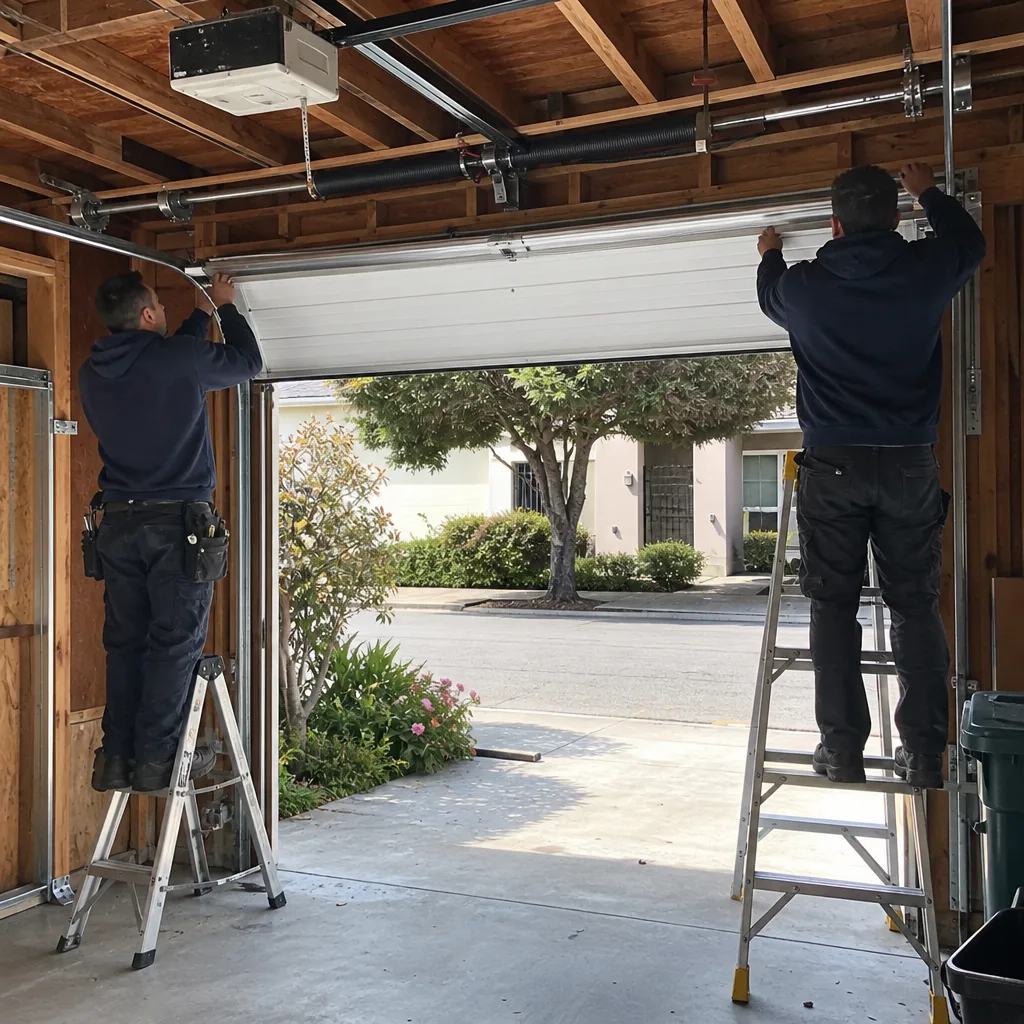
Last updated November 4, 2026
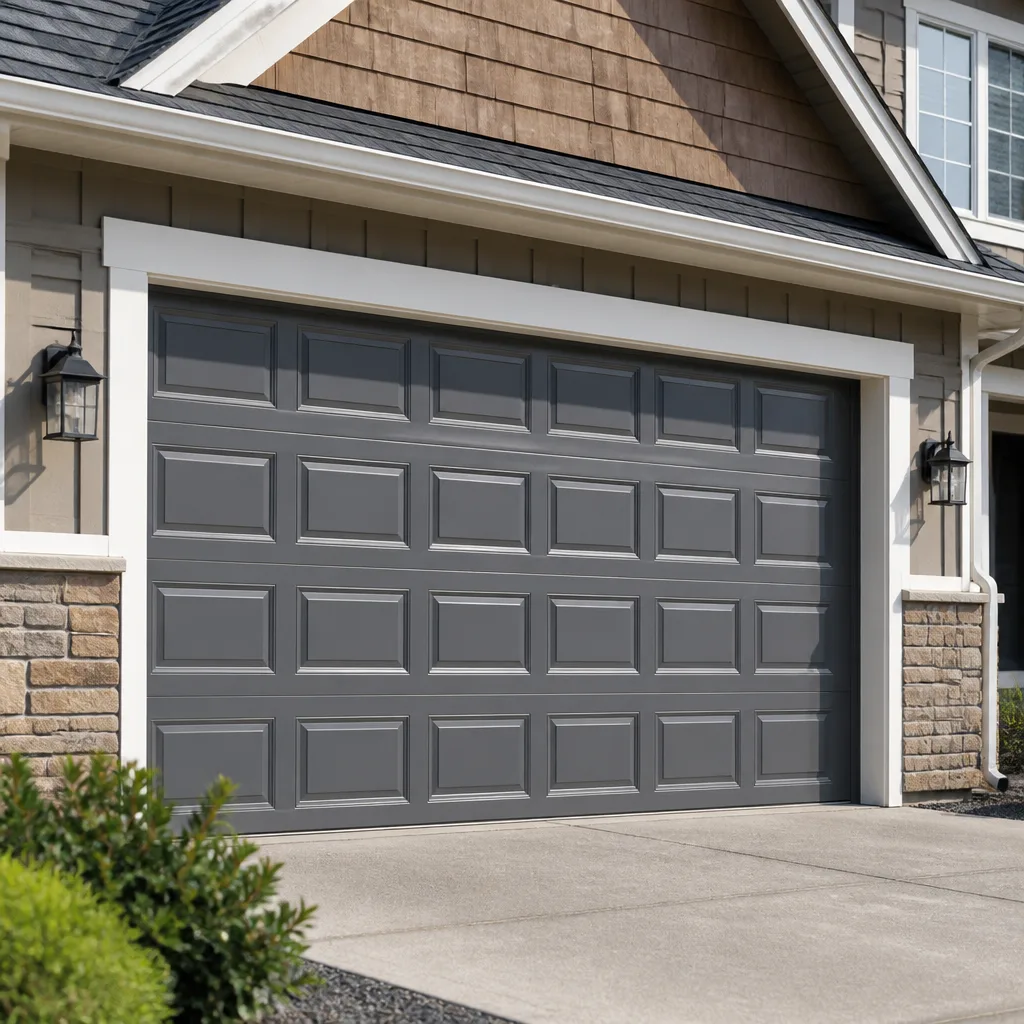 Raised-panel steel
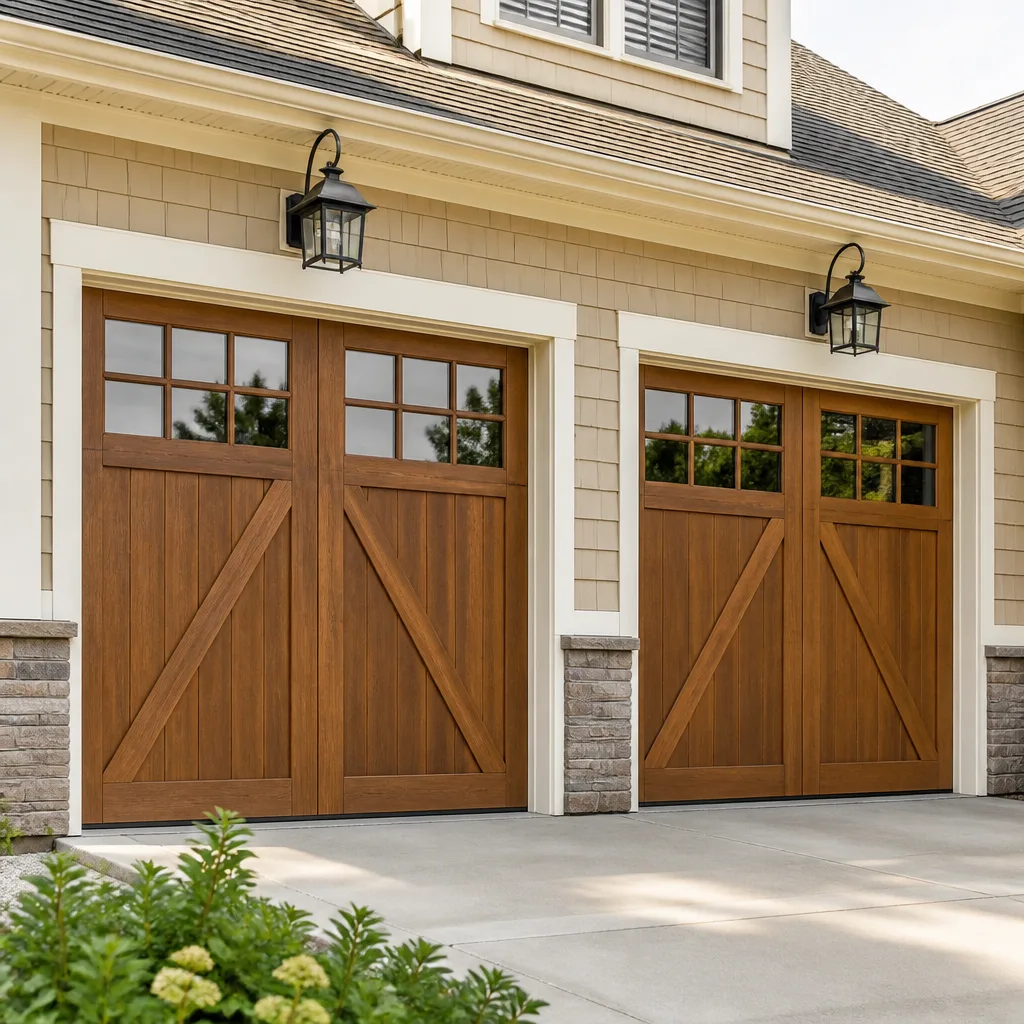 Carriage house
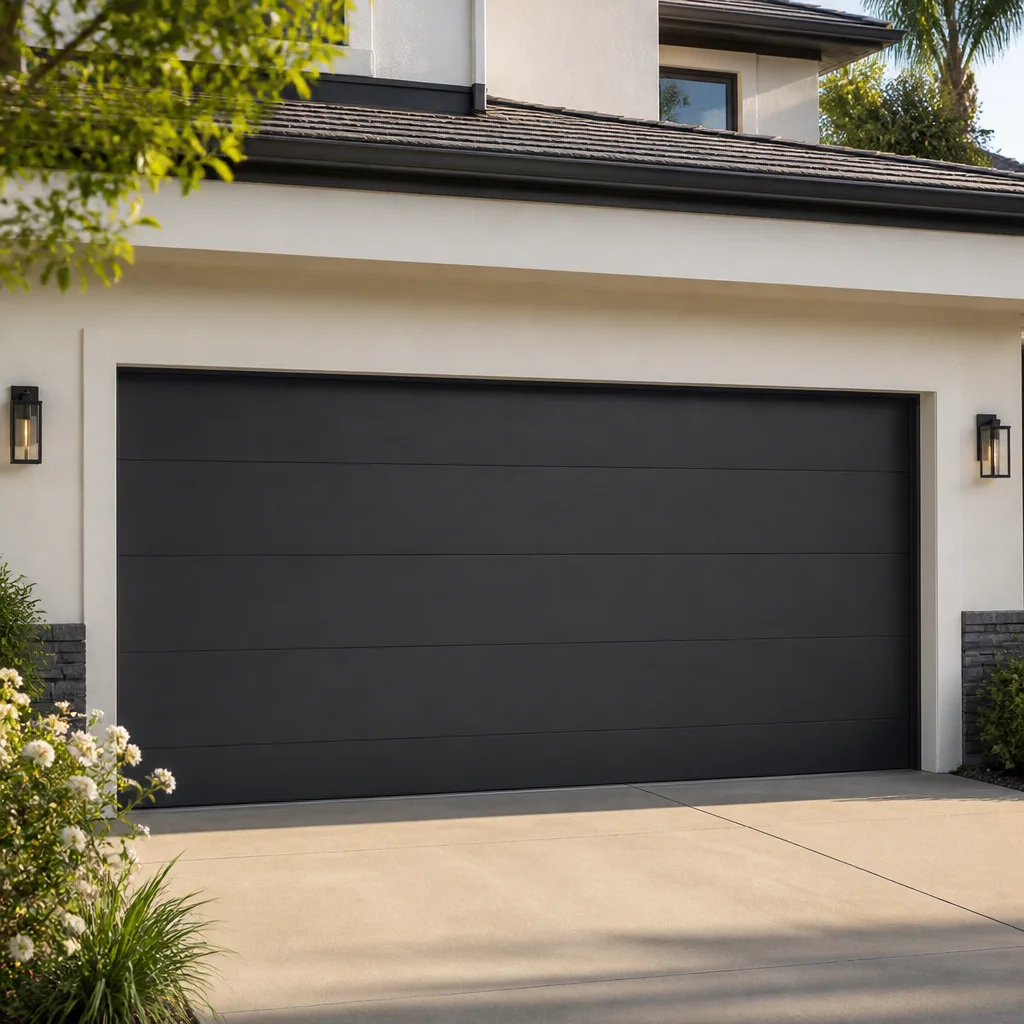 Modern flush
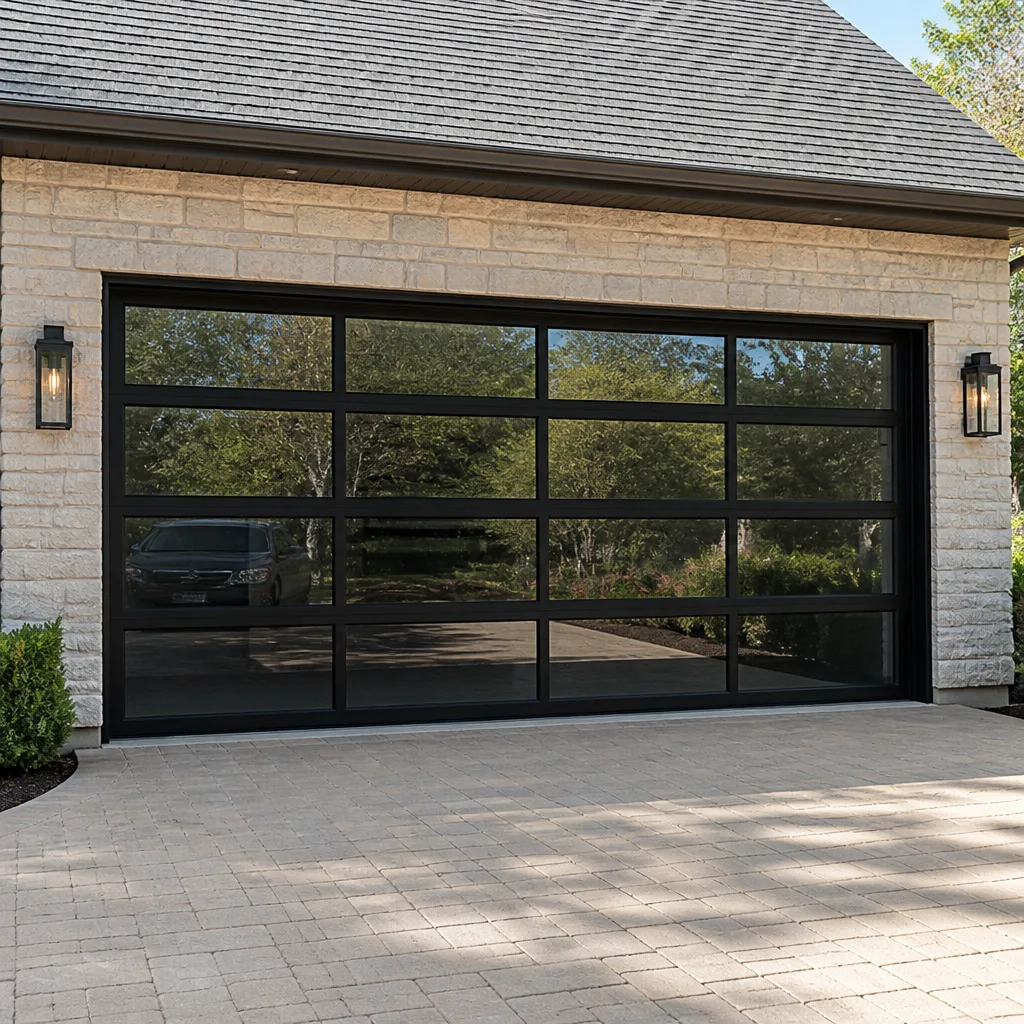 Full-view glass
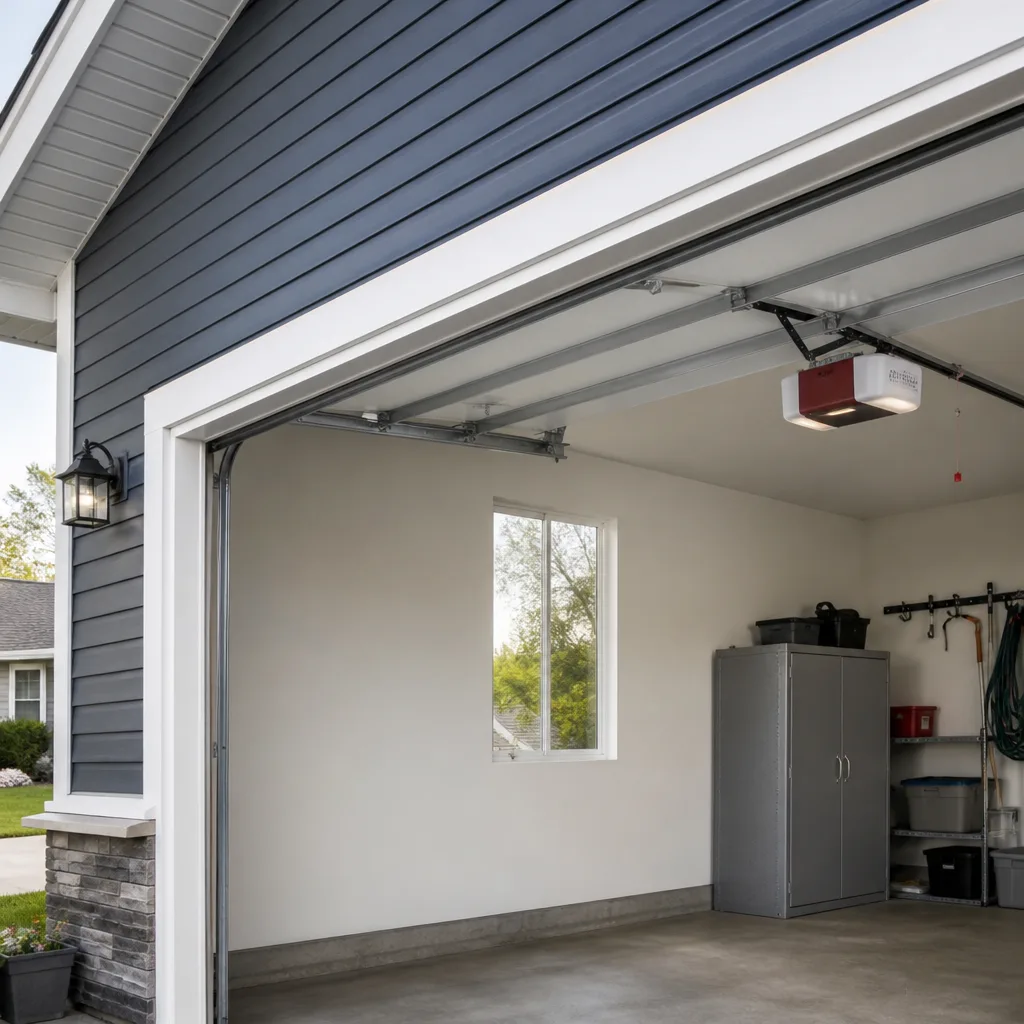 LiftMaster openers
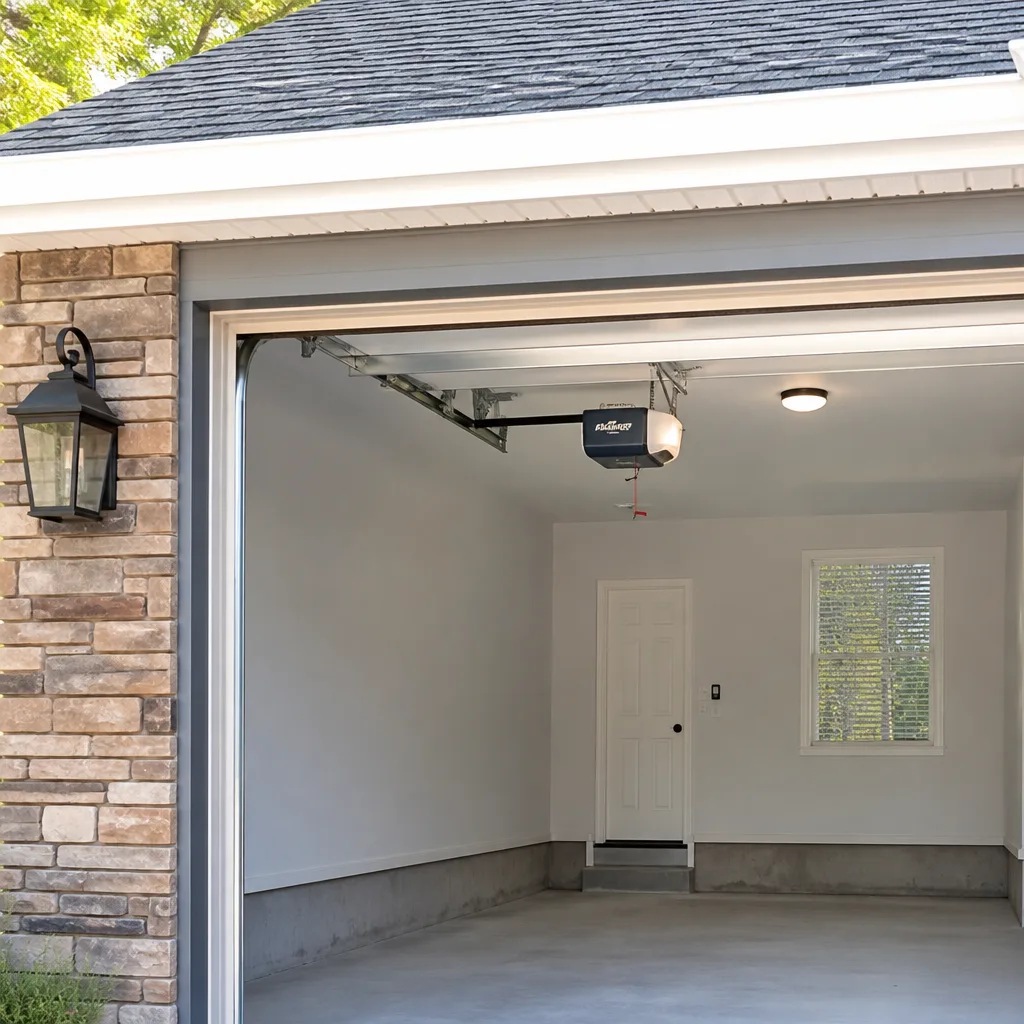 Chamberlain openers
Full 25-point door and opener safety check with every visit - springs, cables, rollers, tracks, and your LiftMaster or Chamberlain opener included
You get a price before we start. It does not change when the truck arrives.
Get your free estimateGarage Door Repair Maintenance Schedule: What to Do and When
Lubricating your garage door hinges every spring won’t prevent the repair bill most Alameda homeowners eventually face, because the part that fails first is almost always the torsion spring. Springs need tension inspection, not oil. Most maintenance guides hand you a generic seasonal checklist that ignores how garage doors actually age: some components wear out on predictable schedules measured in months, others in years, and a few give no warning at all. This guide builds a maintenance schedule around the components most likely to fail, in the order they typically fail. If you live in Alameda and want to stop reacting to breakdowns and start anticipating them, this is the map we use.
Quick Answer
A practical garage door maintenance schedule has three layers: a monthly 30-second balance test, quarterly lubrication and inspection of rollers and hinges, and annual professional checks of spring tension, cable condition, and opener force settings. The torsion spring is the component most likely to fail first, typically between 7 and 12 years in Alameda’s mild coastal climate, and it deserves the most consistent attention. Most other tasks exist to extend the life of parts that are cheaper to replace proactively than after a sudden failure.
Styles & brands we work with
- Raised-panel steel
- Carriage house
- Modern flush
- Full-view glass
- LiftMaster openers
- Chamberlain openers
Table of Contents
- Component Lifespan Hierarchy: What Fails First
- The Monthly 30-Second Balance Test
- Quarterly Inspection: Rollers, Hinges, and Track Bolts
- Six-Month Lubrication: What to Use and What to Skip
- Annual Professional Check: Springs, Cables, and Opener Calibration
- Opener Maintenance Most Guides Ignore
- The 5-Year Milestone: Proactive Replacement vs. Reactive Repair
- The 10-Year Milestone: Full System Assessment
Component Lifespan Hierarchy: What Fails First
If you only remember one thing from this guide, make it this: garage door parts do not wear evenly. Some components are designed to move thousands of times without issue. Others are under constant tension and have a finite number of cycles before they break. The maintenance effort you put into each part should match its actual risk of failure, not the order they appear on a generic checklist.
Here is the hierarchy we use when assessing any door in Alameda, ranked by mean time to failure:
- Torsion springs (7 to 12 years): The most common sudden failure. Springs carry the entire weight of the door every time it opens, and they fatigue from repeated cycling, not from lack of lubrication. A snapped spring means a door that won’t lift or that crashes down if released. On a typical Alameda home that opens the door four times a day, that is roughly 1,400 cycles per year, and most springs are rated for 10,000 cycles. The math explains why they fail first.
- Cables (8 to 14 years): Cables work alongside the springs and fray gradually. They rarely snap without warning, but the warning signs are subtle: a few broken wire strands near the bottom bracket. In a mild climate like Alameda’s, corrosion is slower than in colder regions, but the constant tension still takes its toll.
- Rollers (10 to 15 years): Nylon rollers with sealed bearings last longer than steel rollers, but both eventually develop flat spots or wobble. Worn rollers put extra strain on the opener and can cause the door to rack unevenly in the tracks.
- Hinges (15+ years): Hinges are simple steel stampings and rarely fail catastrophically. They crack, loosen, or elongate their holes over time. They are worth checking quarterly but are near the bottom of the replacement priority list.
- Opener drive systems (10 to 15 years for belts and chains, 7 to 12 years for the motor): The opener is a separate maintenance category. Chain drives stretch, belt drives lose tension gradually, and motor capacitors fail without warning. Many Alameda homes have openers older than the door itself.
This hierarchy shapes everything below. You will spend the most time checking the spring because it is the part most likely to leave you with a door that won’t open at 7 a.m. on a workday. You will spend almost no time on the hinges, because they fail slowly and predictably.
Because we work on doors from Genie, Clopay, Amarr, and Wayne Dalton, along with four other major brands, we see the same failure patterns across every manufacturer. Springs fatigue. Cables fray. Rollers wear. The brand names on the label don’t change the physics.
The Monthly 30-Second Balance Test
This is the single most valuable maintenance habit you can develop, and it costs nothing. A properly balanced door is one where the spring carries the door’s weight so precisely that you can open it by hand with minimal effort. When a spring starts to weaken, the door gets heavier. That extra weight lands on the opener motor, and eventually the opener burns out trying to do the spring’s job.
Here is how to run the test:
- Close the garage door completely.
- Pull the red emergency release cord on the opener to disconnect the trolley from the carriage.
- Lift the door manually by the handle. Move it to waist height, roughly half open.
- Let go.
A properly balanced door will stay exactly where you left it, or drift only an inch or two in either direction. A door that drops toward the floor has a spring that is losing tension or nearing the end of its usable life. A door that shoots upward has been over-tensioned, usually from a previous adjustment that compensated for a worn spring.
If the door drops when you let go, call a professional. The spring needs attention, and on a torsion spring system, the tension is high enough to cause serious injury to anyone who tries to adjust it without the right tools and training. We always recommend that Alameda homeowners run this test monthly and treat any significant drift as an early warning, not a curiosity.
For anyone with an opener that lifts a heavy door slowly or pauses mid-cycle, the balance test usually explains it. The motor is working against a spring that has already failed mechanically, even if it has not snapped yet. If you need garage door opener repair, the first thing a good technician checks is the spring balance, not the motor.
Quarterly Inspection: Rollers, Hinges, and Track Bolts
Four times a year is the right cadence for visual and mechanical checks of the components you can see without touching anything under tension. This inspection takes ten minutes and requires only your eyes, a socket wrench, and good lighting.
Walk through these steps:
- Look at each roller where it meets the track. Worn rollers show as flat spots on the wheel, visible wobble when the door moves, or a gap between the roller and the track wall. Nylon rollers can crack. Steel rollers can rust, even in Alameda’s moderate climate, especially in a garage that stays damp.
- Inspect hinges at each section joint. Look for cracks in the metal, especially at the top and bottom hinge brackets where the door carries the most stress. Check that all hinge bolts are snug. A loose hinge lets the door flex in the track and wears the rollers unevenly.
- Run your hand along each track (with the door closed) to feel for loose fasteners or mounting bolts. Wiggle the track. It should be rigid. A track that moves should be re-secured before it throws the door off alignment.
- Check the weatherseal at the bottom of the door and around the jamb. In Alameda, the mild winters mean the seal’s primary job is keeping dust and moisture out rather than snow. A torn or brittle seal is a cheap fix that pays off in a cleaner, drier garage.
None of these items are emergencies if they show wear. They are early indicators. A cracked roller can run for months, but replacing it proactively during a routine garage door repair visit costs less than the damage it causes when it finally seizes and drags a wheel flat-spot down the track.
Six-Month Lubrication: What to Use and What to Skip
Twice a year is the right interval for garage door lubrication in Alameda. The climate here is dry compared to coastal areas further north, but garages still collect dust, and the wrong lubricant turns that dust into abrasive paste. The shop-vac and the spray can matter equally.
Here is what the schedule looks like:
- Every six months: Wipe down the track interior with a clean rag. Garage door tracks are not meant to be greased, and any lubricant inside the track attracts the exact grit that accelerates roller wear. The track should be clean and dry.
- Every six months: Apply a small amount of white lithium grease or a garage-door-specific spray to the hinge pins, the roller ball bearings (if serviceable), and the torsion spring (the spring should get a light coat to reduce friction between coils, not to “restore” tension), and the opener rail on a chain drive. A light coat, not a soak.
- Every six months: Vacuum dust off the opener motor housing and around the photo-eye lenses. In Alameda’s dry season, especially summer through late fall, fine dust accumulates faster.
What to skip: never use WD-40 or a penetrating oil as a garage door lubricant. It strips away the heavier grease that the hinges and rollers actually need, and it dries quickly. Never grease the track. Never spray the cables. Cables do not need lubrication, and a greasy cable collects grit that accelerates fraying.
The most common mistake we see in Alameda garages is over-lubrication. Homeowners spray every moving part until it drips, and the excess ends up on the door surface, the floor, and inside the track. Less is more. A thin, even film is the goal. If it is dripping, you used too much.
Annual Professional Check: Springs, Cables, and Opener Calibration
Once a year, you should have a trained technician inspect the three things that cause the majority of garage door failures: spring tension, cable condition, and opener calibration. This is a 45-minute visit that catches the slow-moving failures that a homeowner’s quarterly inspection misses.
Here is what a thorough annual check includes for an Alameda home:
- Spring tension measurement: A technician checks whether the spring is holding the door at half-open and compares current cycle count against the spring’s rated life. A spring that is 80% through its expected cycles is a candidate for proactive replacement, even if it hasn’t snapped yet.
- Cable inspection: The technician stretches each cable slightly and looks for broken strands, especially where the cable wraps around the bottom bracket and the drum. Fraying here is the precursor to a cable snap.
- Opener force settings: The opener’s force limits should be adjusted so the door reverses with light pressure on the way down. Force settings drift over time as the spring weakens and the door gets heavier. The technician calibrates both the down-force and the up-force.
- Limit switch adjustment: The travel limits that tell the opener where “open” and “closed” are drift with cable stretch and track wear. A door that slams into the ground or reverses before fully closed usually needs a limit adjustment, not a new opener.
- Photo-eye alignment: The safety sensors at the bottom of each track must be aligned so the beam is unbroken. Even a slight bump from a garbage can or a bicycle can knock them out of alignment, and the door will refuse to close.
We handle both door mechanics and opener systems at Oakridge Garage Door Service, so this check is one visit, not two. That matters in Alameda where many older homes have openers that were added years after the door was installed, often with mismatched components from different eras. Door and opener, handled together.
Opener Maintenance Most Guides Ignore
Garage door openers are treated like appliances: install them and forget them until they fail. That works poorly, because openers have the same drift-and-wear characteristics as any electro-mechanical system. Here is what most guides leave out.
Drive Belt and Chain Tension
A chain drive opener has a chain that stretches over years of cycling. A belt drive opener has a reinforced rubber belt that also stretches, though less dramatically. Both need tension checks. A chain that is too loose slaps against the rail and wears the sprocket. A belt that loses tension can slip on the drive gear, which causes the door to move in jerks and shortens motor life. Most openers have a tension adjustment nut or bolt accessible on the rail, but unless you know the factory spec for your model, it is easier and safer to have someone who services that brand check it.
Force Settings Drift
The open and close force controls are the two dials or digital settings on the opener that tell the motor how hard to push or pull. When a door is new and the spring is fresh, the motor should need very little force. As the spring fatigues, the door gets heavier, and a technician who retightens the settings without checking the spring is masking a mechanical problem. We have seen openers on Genie and Craftsman units in Alameda where the force settings were cranked to maximum to compensate for a dead spring. That opener was running on borrowed time.
Limit Switch Recalibration
Most openers have two limit settings: one for fully open, one for fully closed. These limits control how far the trolley travels on the rail. Over time, cable stretch, track wear, and even temperature changes shift the resting positions. A door that used to close flush with the slab and now leaves a half-inch gap has a limit issue. A door that bounces at the top of the track has a limit issue at the open end. Recalibration is a five-minute job for a technician with the right model knowledge and half a day of frustration for a homeowner guessing at it.
None of these opener tasks require replacing parts. They require knowing which adjustment affects which symptom, and that is where brand fluency matters. We work on openers from all eight major manufacturers, so the answer is never “that brand isn’t something we service.”
The 5-Year Milestone: Proactive Replacement vs. Reactive Repair
At the five-year mark, most garage doors in Alameda have logged between 7,000 and 9,000 open-and-close cycles. The door is still functioning normally, but several components are entering the second half of their service life. This is the point where proactive decisions start to make financial sense.
Consider two scenarios for a typical Alameda single-car door:
- Proactive spring replacement at year 7: You schedule a spring replacement before the old one snaps. The door is still balanced, so the technician can replace both springs in a controlled way. Total cost is typically between $180 and $340 for one spring, or roughly double for the matched pair. You lose no days of use. The door is down for about an hour.
- Reactive spring replacement when it snaps: The spring breaks while the door is closed. The door won’t open manually because the spring is no longer counterbalancing the weight. You miss work, or you call out a technician and wait. The repair itself is the same price range, but now you are paying for it on the worst possible day, and the opener may have taken extra strain in the final weeks before the snap. If the cable also broke, which happens when a snapped spring lets the door drop unevenly, the bill goes up.
The cost of proactive replacement after the spring has reached its expected cycle count is roughly the same as the repair after it breaks. The difference is convenience, not price. The same logic applies to cables: replacing frayed cables at their first major inspection costs less than replacing a bent track when a snapped cable whips the door out of alignment.
In Alameda, where many homes have garages that double as workshops or storage, a door that won’t open is not just a disruption. It is a safety hazard if you need access to the breaker panel or the water shutoff. Proactive replacement keeps the door available when you need it.
We give this same recommendation to every homeowner: repair or replace? Here is what we actually recommend and why. If a part is at 80% of its expected life and you can schedule the work on your terms, that is usually the smarter call. If the part has already failed, we fix it, and then we tell you what else is close behind so you are not caught twice.
The 10-Year Milestone: Full System Assessment
At ten years, the question is no longer which individual part needs attention. It is whether the door and opener together are worth maintaining as a system, or whether replacement makes more sense than piecemeal repair. This is the point where many Alameda homeowners face a decision they did not expect to make.
Here is what a full system assessment looks like when we perform one:
- Door panel condition: On steel doors from Clopay, Amarr, or Wayne Dalton, check for rust at the bottom edge, dents from years of use, and section misalignment. A door that is rusting through its bottom panel is nearing the end of its cosmetic and structural life, even if the springs and cables are fine.
- Track and mounting hardware: Check every track bolt, every mounting bracket, and the overall alignment of the track system. A door that has shifted out of square can be realigned, but repeated realignment is a sign the door structure itself is fatiguing.
- Opener logic board and motor: Openers from Genie or Chamberlain that are ten years old may still run, but the logic boards start showing intermittent failures: doors that reverse for no reason, remotes that lose programming, and safety sensor faults that come and go. A new opener with a modern DC motor is quieter and uses less energy than a ten-year-old AC motor.
- Total cost-of-repair versus replacement: If the door needs springs, cables, three rollers, and a new opener in the next 12 months, the combined bill often approaches 60 to 70% of a full new install. At that point, replacement delivers a new door with a new spring, new cables, new rollers, and a new opener, all under warranty.
We service Genie, Clopay, Amarr, and Wayne Dalton doors, along with four other major manufacturers, so a full system assessment is based on what you have installed and what it actually needs, not on steering you toward a brand we happen to sell. Eight brands, one number to call.
Common Mistakes to Avoid
- Greasing the track. The track is designed to run dry. Any lubricant inside it collects dust and grit, and that grit grinds the roller bearings down faster. If the track is noisy, the problem is usually a worn roller or a misaligned track, not a lack of grease.
- Lubricating a weak spring instead of testing it. A spring that has lost tension will not be fixed by spraying it. Lubrication changes friction, not tension. If the door drops in the balance test, the spring needs professional attention.
- Adjusting the opener force settings to compensate for a heavy door. This is how openers burn out. If the door is heavier than it used to be, the spring is failing. Cranking the force settings masks the problem and kills the motor.
- Ignoring a one-inch gap at the bottom of the door. That gap is usually a limit switch issue, and it also means the door is not sealing against the weatherseal. In Alameda, an unsealed garage lets dust, moisture, and pests in year-round.
- Replacing cables without checking the spring. Cables and springs work as a matched set. If a cable snapped, the spring probably took unusual force as the door dropped unevenly. Replacing the cable alone leaves the original spring in place with unknown remaining life.
- Waiting until a spring snaps to replace it. A snapped spring never happens on a convenient day. If you know your springs have passed the 10,000-cycle mark, the smart move is to replace them before they fail.
- Letting your opener run a door it was never sized for. A door that is heavier than the opener’s rating will destroy the motor and strip the drive gear. This is especially common in Alameda where older single-car garages have been expanded with heavier insulated doors and the original opener kept in place.
See the difference
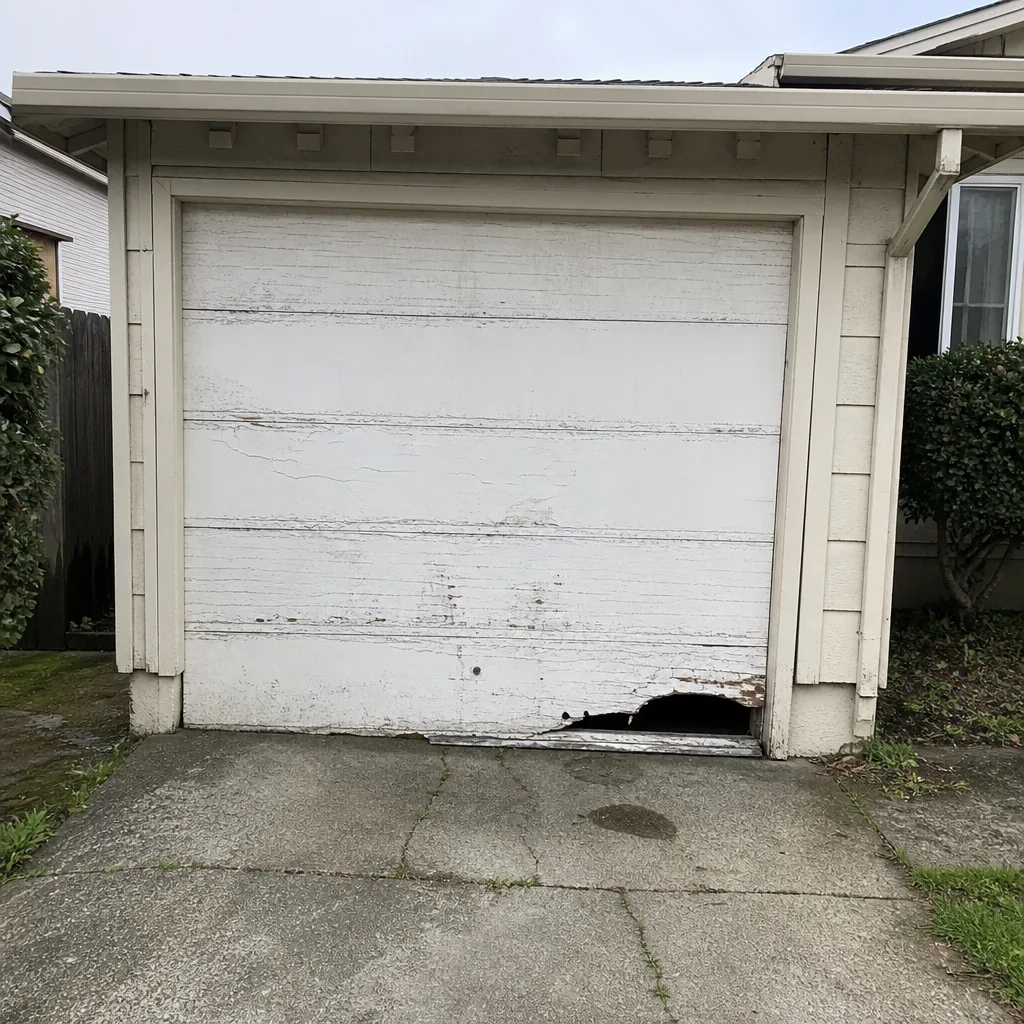 Before
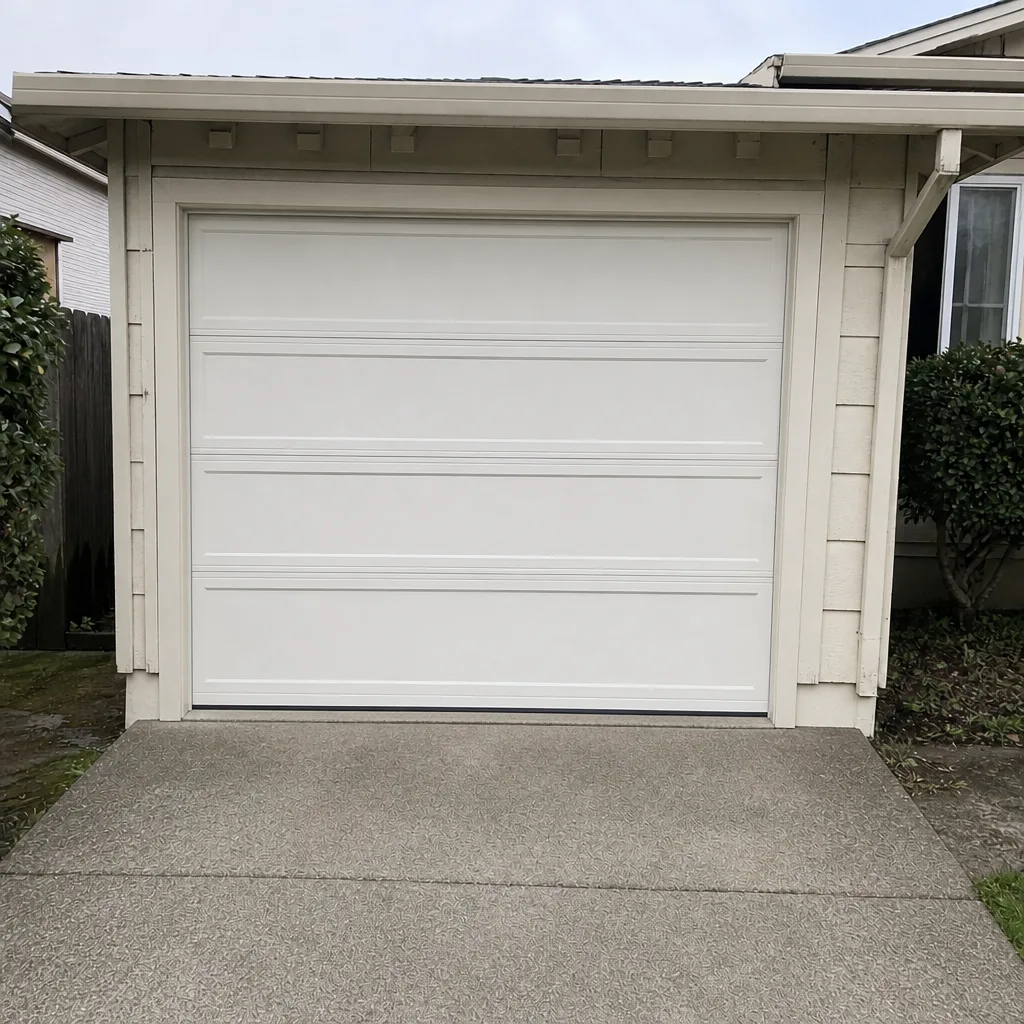 After
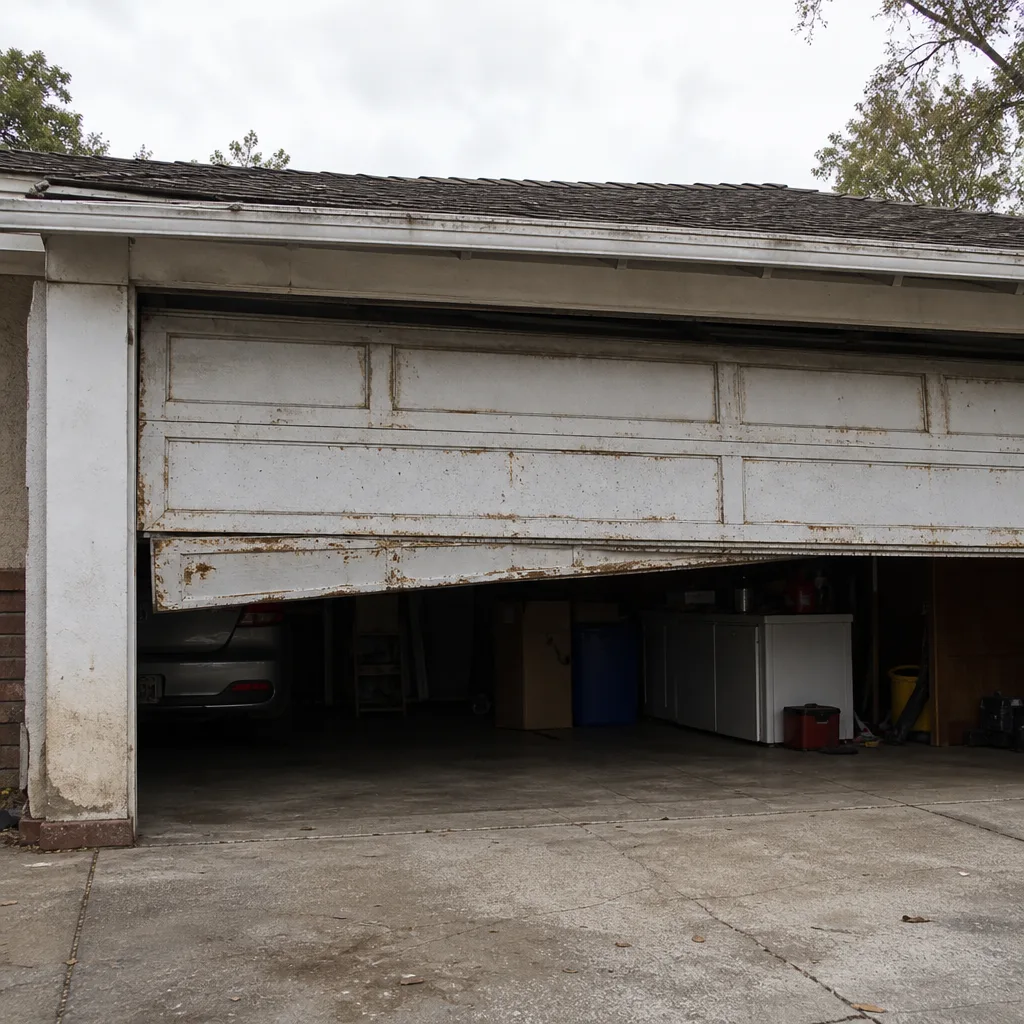 Before
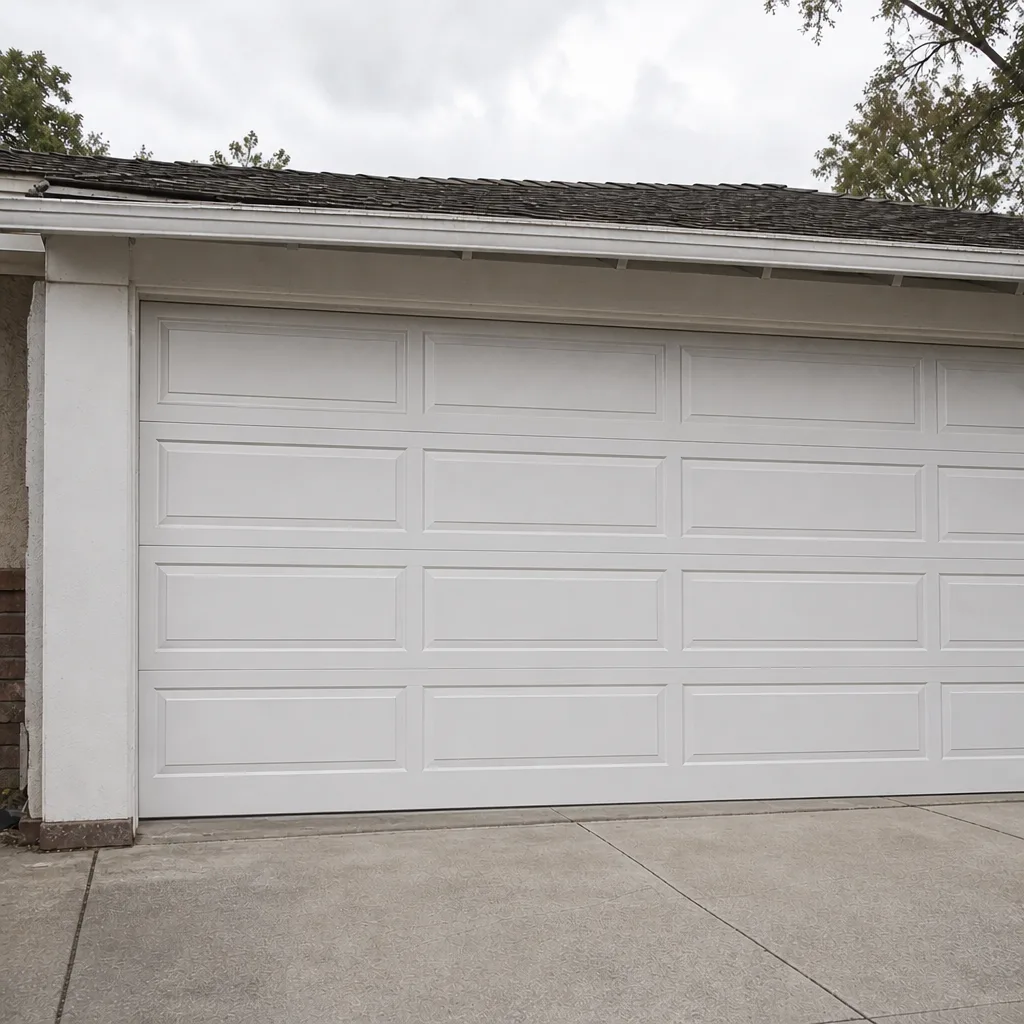 After
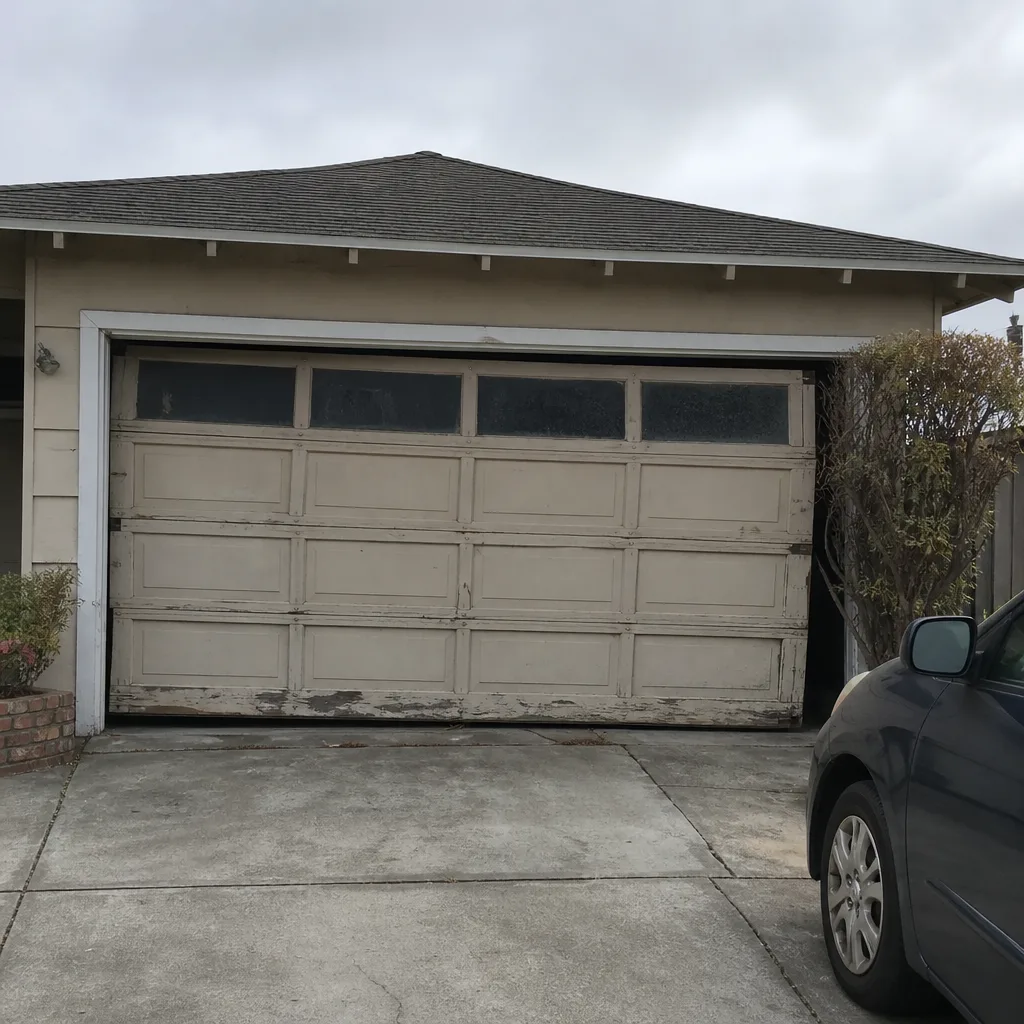 Before
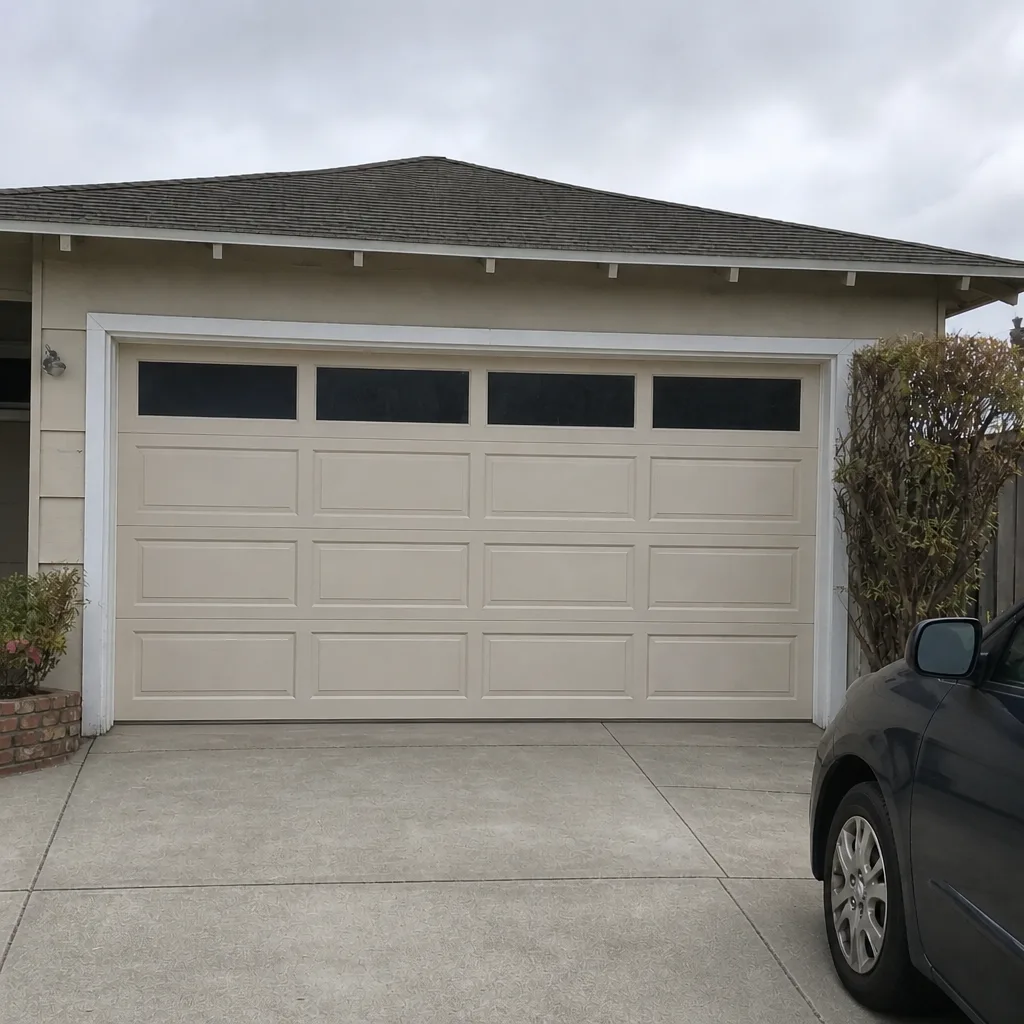 After
When to Call a Professional
Call a professional if your door drops more than a few inches in the balance test, if you see broken strands on any cable, if you hear a sharp bang from the garage that sounds like a gunshot (that is a torsion spring snapping), or if your opener reverses every time you try to close the door. These are not lubrication issues. They are mechanical failures, and on a torsion spring system, the stored energy is high enough to cause serious injury to anyone who tries to release it without the proper tools and training.
Oakridge Garage Door Service offers free estimates in Alameda. Call (855) 341-8689. We answer 24/7. Fast dispatch from 7am to 7pm, Sunday through Friday.
Frequently Asked Questions
You should run the monthly balance test every 30 days, lubricate and inspect hinges and rollers every six months, and have a professional check springs, cables, and opener calibration once a year. That is a total of about 90 minutes of your own time annually, plus one 45-minute professional visit.
The torsion spring is the most common sudden failure because it carries the door’s full weight every cycle and has a finite fatigue life. On most doors in Alameda, that life is between 7 and 12 years, depending on daily cycles. Springs do not fail from lack of lubrication. They fail from metal fatigue, and that is why tension inspection matters more than spraying them.
You can apply a light coat of white lithium grease or garage-door-specific spray to the spring coils to reduce friction between them, but lubrication does not restore tension or extend the spring’s cycle life in any meaningful way. The dangerous work – adjusting, removing, or replacing a spring – is not a DIY job. The stored energy in a torsion spring can cause severe injury if the spring releases while you are working on it.
Run the balance test: disconnect the opener, lift the door to waist height, and let go. If the door drops toward the floor, the spring has lost tension and needs professional attention. Other signs include a door that feels unusually heavy to lift manually, visible gaps between spring coils, or a spring that has already snapped into two pieces. If you are unsure, call for a professional inspection. The estimate is free.
Yes, and it is the most overlooked part of most maintenance schedules. Openers need chain or belt tension checks, force setting calibration as the door’s weight changes, and limit switch adjustment when the door stops leaving a gap or bounces at the top. Many “broken” openers are actually perfectly functional openers with drifted settings and a worn spring underneath.
The price of the replacement itself is roughly the same whether the spring is replaced proactively or after it snaps. For a typical single-car door in Alameda, one spring replacement typically runs $180 to $340, and a matched pair runs about double that. The difference is that proactive replacement happens on your schedule, while a snapped spring means a door that will not open until someone comes out. The proactive option is the same price and far less disruptive.
The Bottom Line
Garage door maintenance is not about a seasonal checklist. It is about knowing which parts fail first, checking them on a schedule that matches their actual risk, and replacing worn components before they force your hand. Run the balance test monthly. Lubricate sparingly twice a year. Get a professional spring, cable, and opener check annually. At five years, plan for proactive spring replacement. At ten years, assess the whole system honestly. Most Alameda garage doors are the same basic mechanical system under different brand labels, and the failure patterns are consistent. The homeowners who stay ahead of those patterns are the ones whose garage doors open every morning without complaint.
Written by the team at Oakridge Garage Door Service, serving Alameda since 2015.